We have already spoken about the Eidasu, an ancient and powerful people who still seek to reclaim their former greatness. Now it is time to introduce the youngest of the three branches descended from Ewa’s children.
Saїnna
Or Zaїnna, as the Sklavs more commonly call them. Among other peoples, the shorter name Zayna can also be heard.
Much less is known about them than about the Eidasu or the Oraolё. The Saїnna no longer have a state of their own, a king, or a large army. Their capital was destroyed, their royal line ended long ago, and those who survived the fall of Godol Khan scattered across the Continent.
Yet the Saїnna did not disappear. We already know one of them quite well: Aldis Agonalusta, or simply Aldis of House Lusta, one of the characters in The Tale of the Ice Beast.
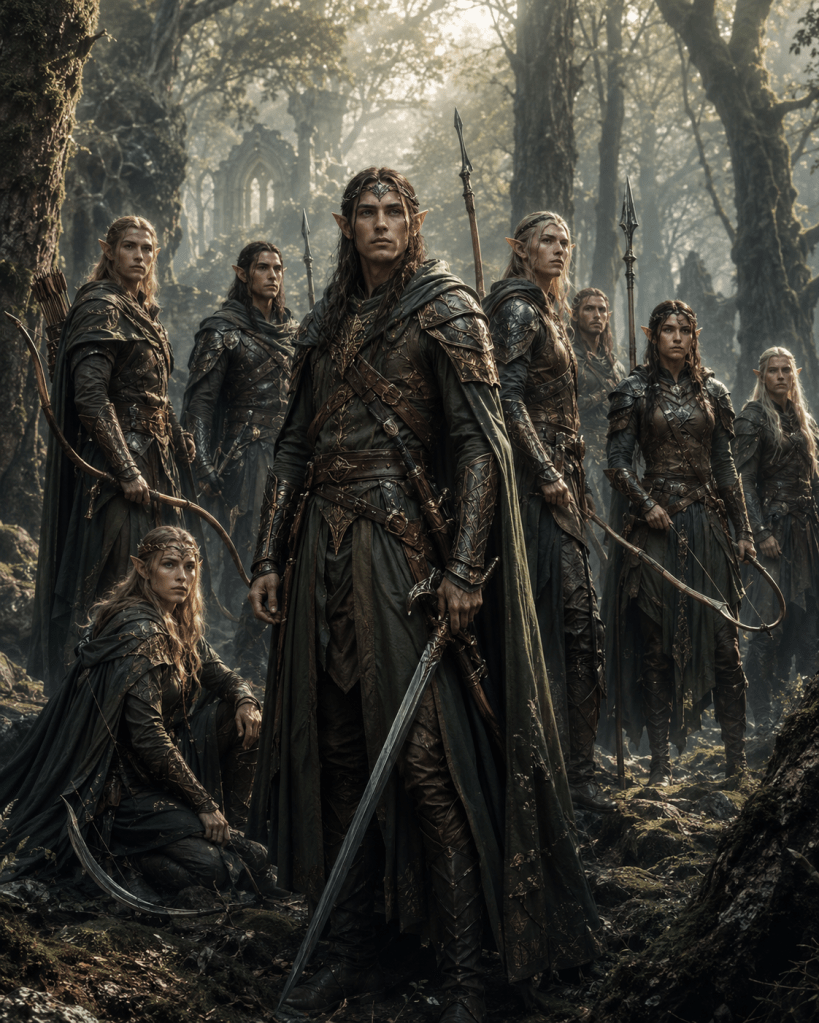
Tenne’oi Foret — the Southern Forest
After the Great Sundering that ended the first war between the brothers, the Saїnna settled in the far south of the Continent, among ancient forests, river valleys, and the foothills of Gortmrat. The region became known as Tenne’oi Foret, or the Southern Forest.
The Saїnna rarely built large cities. Their settlements were hidden among the trees, along riverbanks and forest terraces. Buildings curved around ancient trunks, bridges connected the sides of ravines, and water flowed freely through the lower levels of their settlements.
Their only truly large city was their capital, Godol Khan.
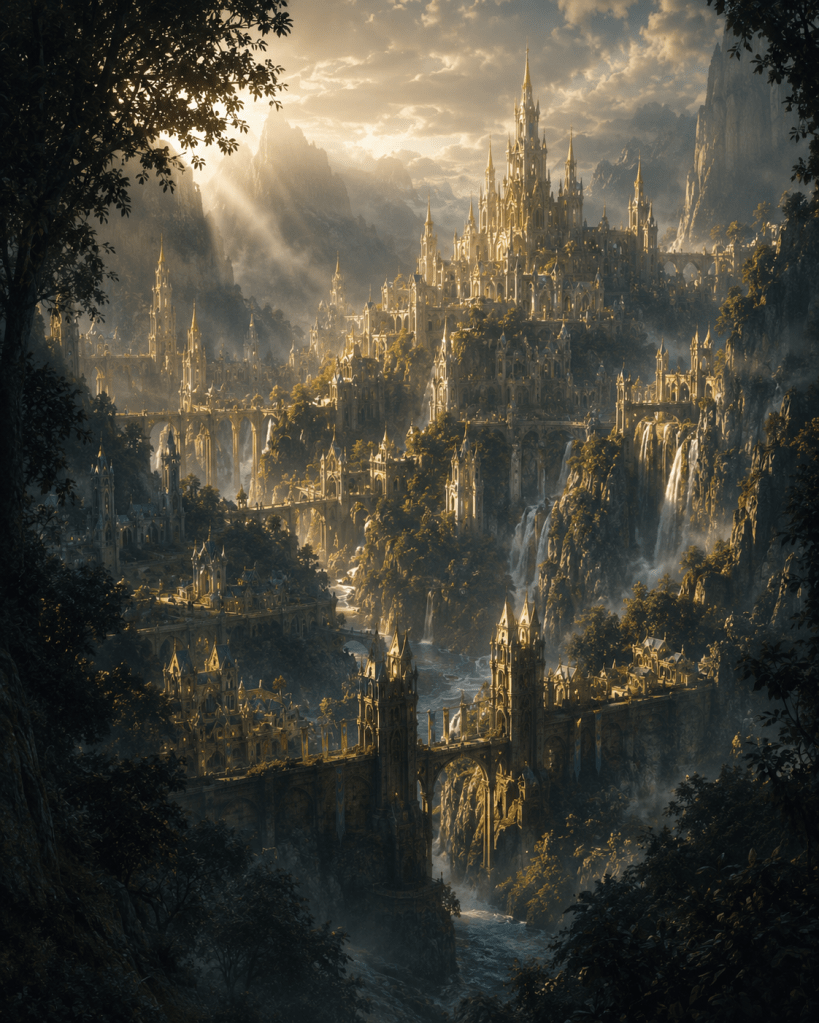
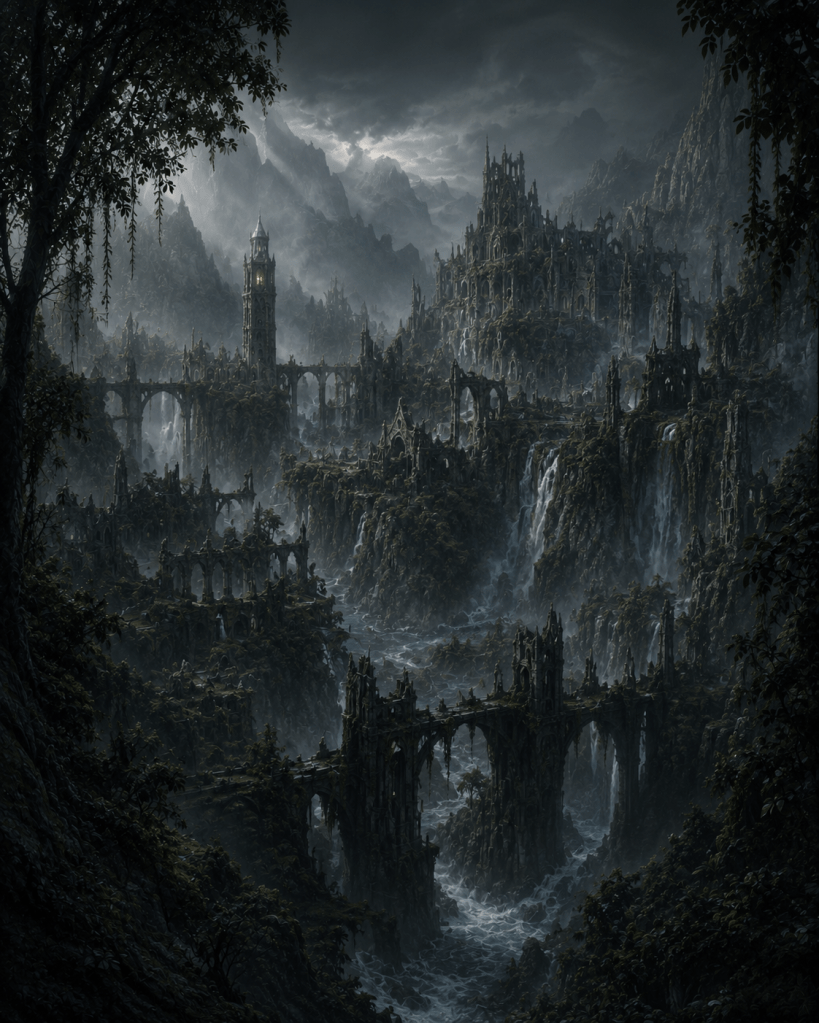
In Laeg’ini, its name roughly means “Fortress-Castle,” which describes the city well. Godol Khan was both a capital and a heavily fortified citadel. Its pale towers rose above the Southern Forest, rivers flowed through its terraces and gardens, and high bridges connected different parts of the city over waterfalls and deep ravines.
The Saїnna did not believe they had built Godol Khan within the forest. They said the city had grown alongside it.
The People Who Knew How to Listen
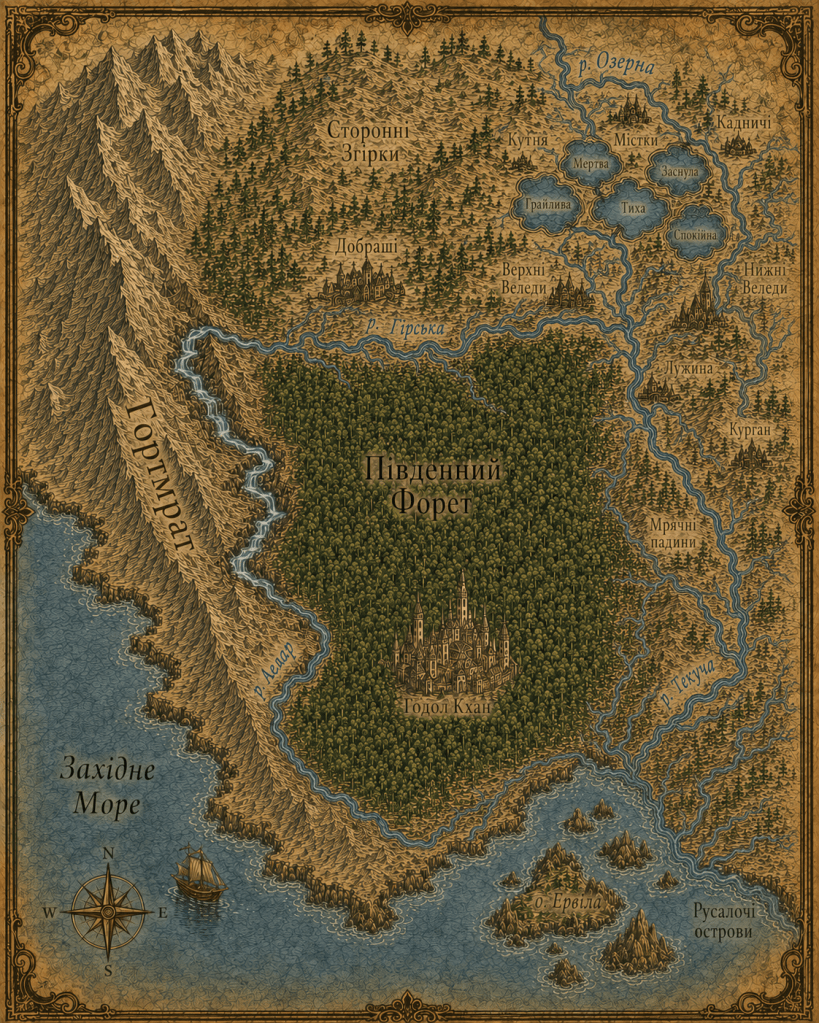
Of the three branches descended from Ewa’s children, the Saїnna tied their lives most closely to the forest. They had fair skin, pointed ears, and predominantly green eyes, while their hair could be almost any natural shade, from pale gold to dark chestnut.
They believed that the living world could never truly be conquered. It could be frightened, forced into obedience, or broken, but such control would always be temporary. That was why their magic began with learning how to listen to everything around them.
Saїnna mages studied plants, animals, and anything that still carried even the smallest trace of life. They noticed a creature’s fear, pain, and habits, searched for the reason behind its behaviour, and only then attempted to influence it.
This was why the Saїnna had so many healers, prophets, and experts in creatures that other peoples considered wild or dangerous. Some of them could even sense traces of things that had already died.
Perhaps this ability later allowed Aldis to achieve something that even Niam had considered impossible.
The Royal House of Elmareviir
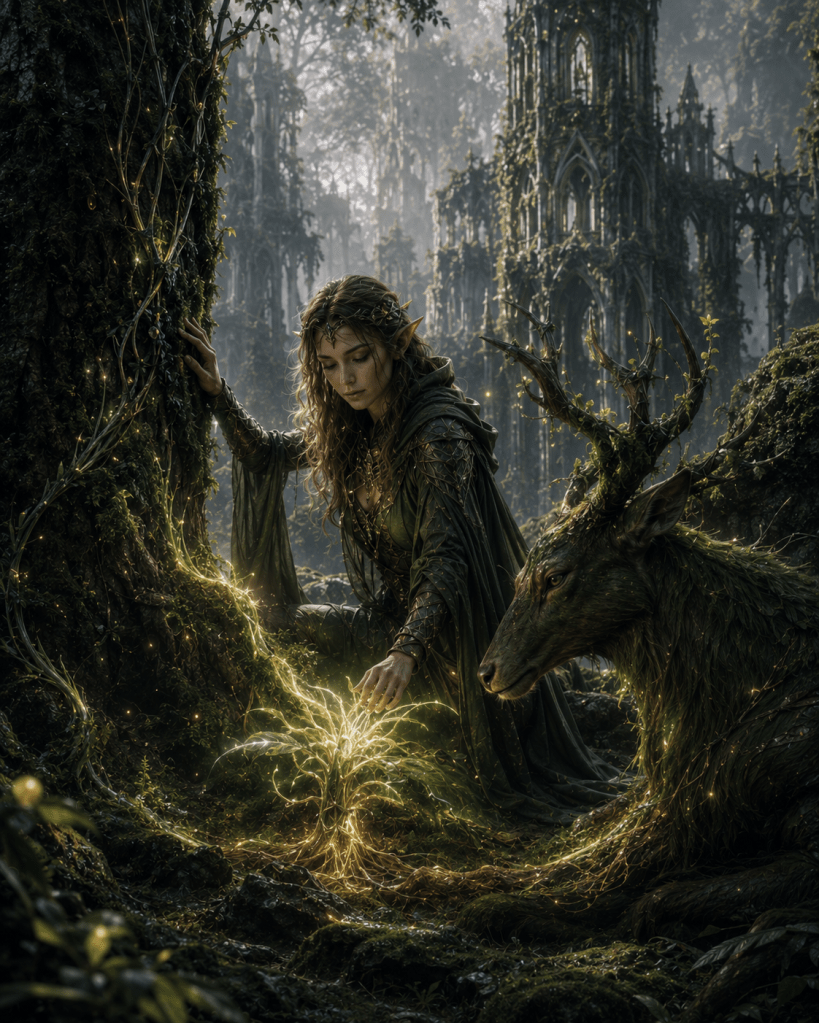
Before the fall of Godol Khan, the Saїnna were ruled by House Elmareviir. The right to the throne passed to the eldest child regardless of gender, so the Southern Forest had been ruled by both kings and queens.
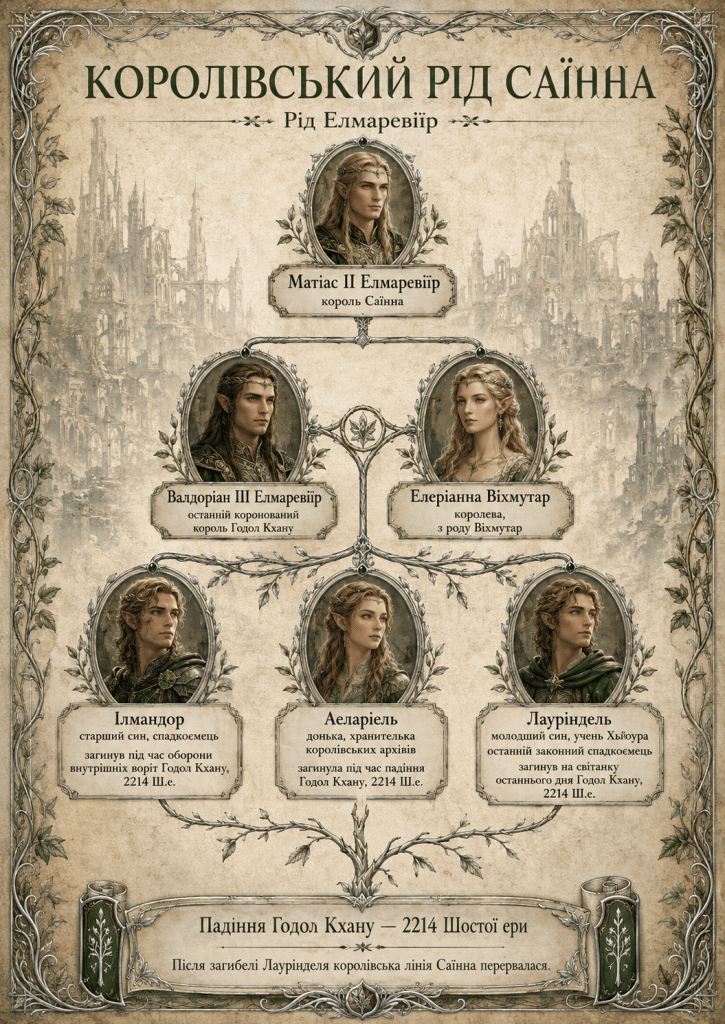
The last crowned ruler was Valdorian III Elmareviir. He and Queen Elerianna Vikhmutar had three children: their eldest son and heir, Ilmandor; Aelariel, keeper of the royal archives; and their youngest son, Laurindel, who studied under Magister Khyour.
None of them left descendants.
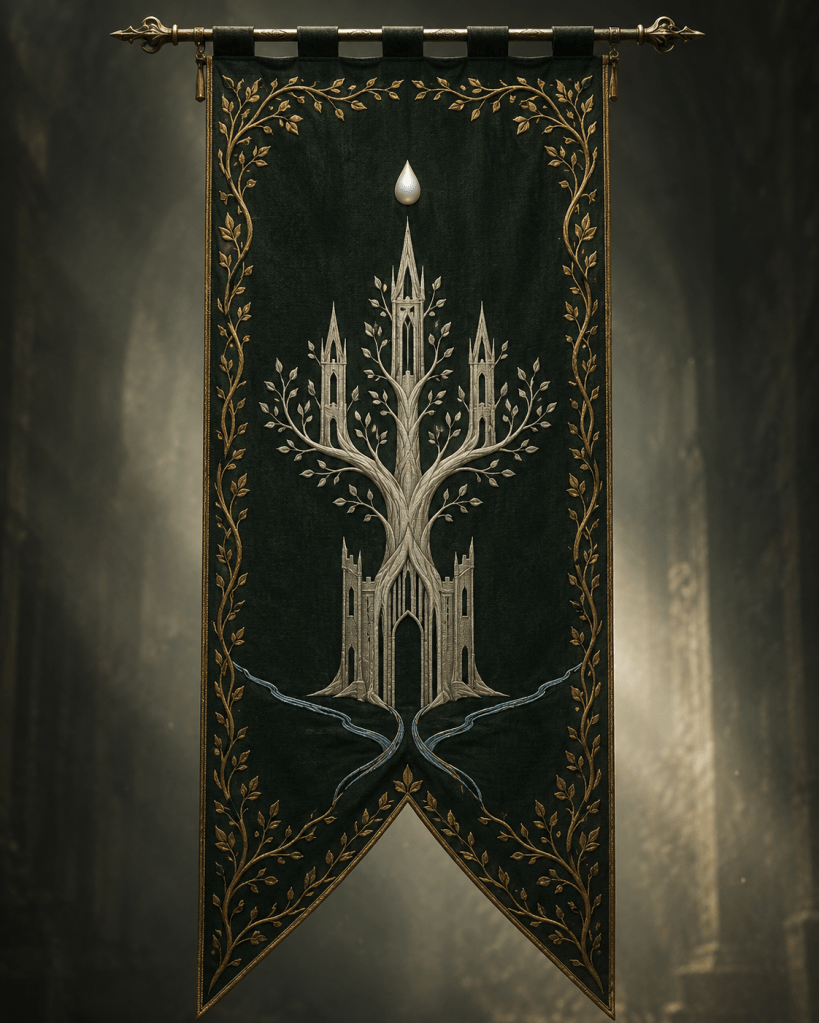
The Saїnna royal banner had a dark green field. At its centre, a silver tree merged with the gates of Godol Khan, while its three upper branches resembled both towers and a crown. Above them shone a white droplet associated with Eva’s blessing, and two silver-blue rivers met below.
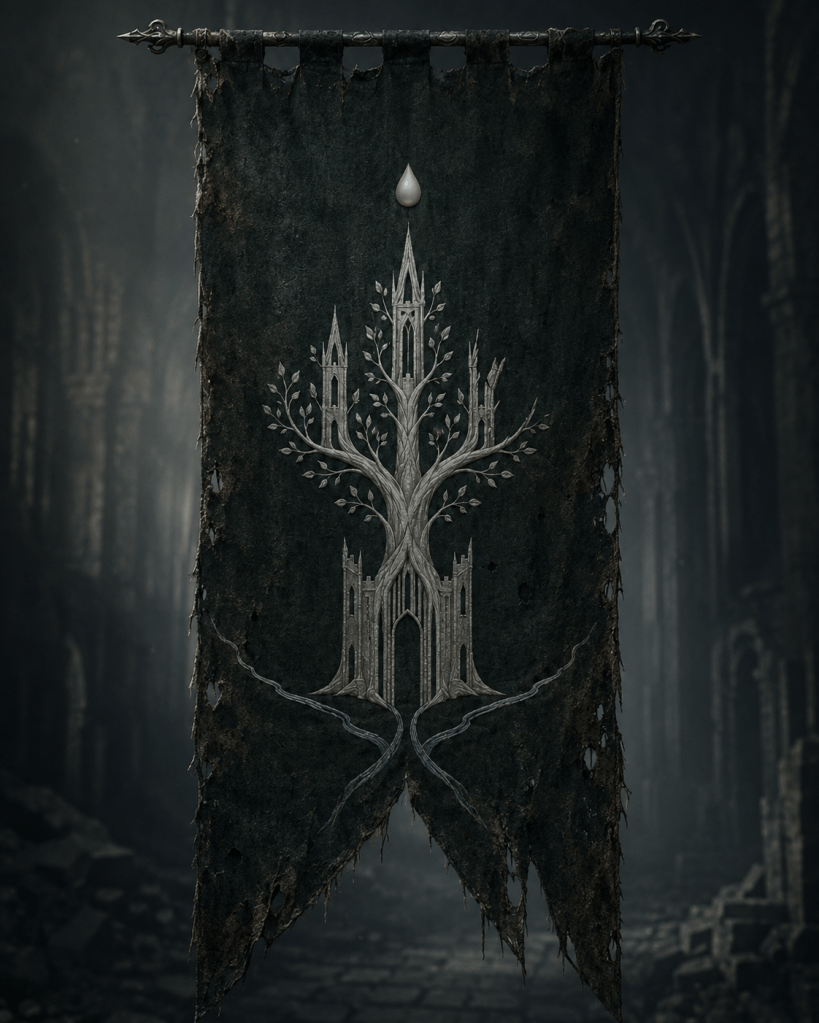
After the death of the royal family, the golden border was removed from the banner, and one of the three branches began to be shown as broken. The symbol of royal authority became a reminder of a kingdom that no longer existed.
The Fall of Godol Khan
Godol Khan fell in 2214 of the Sixth Era.
The war between the Eidasu and the Saїnna ended with the destruction of the capital, the death of the royal house, and the dispersal of a people who had called the Southern Forest their home for centuries.
King Valdorian was killed while defending the city. Ilmandor was meant to succeed him, but there was no time for a coronation. He assumed command of the Saїnna warriors and died shortly after his father.
Aelariel remained in the royal archives until nearly the very end. Thanks to her, some of the books, genealogies, and ancient records were saved, but she herself never left Godol Khan.
The last lawful heir was seventeen-year-old Laurindel. He had studied under Khyour and had already mastered some of the Saїnna’s ancient knowledge. Survivors gave conflicting accounts of what happened to him during the fall of the capital.
All that is known for certain is that Laurindel was the last member of House Elmareviir to die, having been heir to the throne for only a few hours. With his death, the Saїnna royal line ended, and they never chose another ruler.
Khyour
After the fall of the capital, Khyour became the only person who continued to live permanently among its ruins. He was one of the Saїnna mages and the most powerful prophet alive at the time.
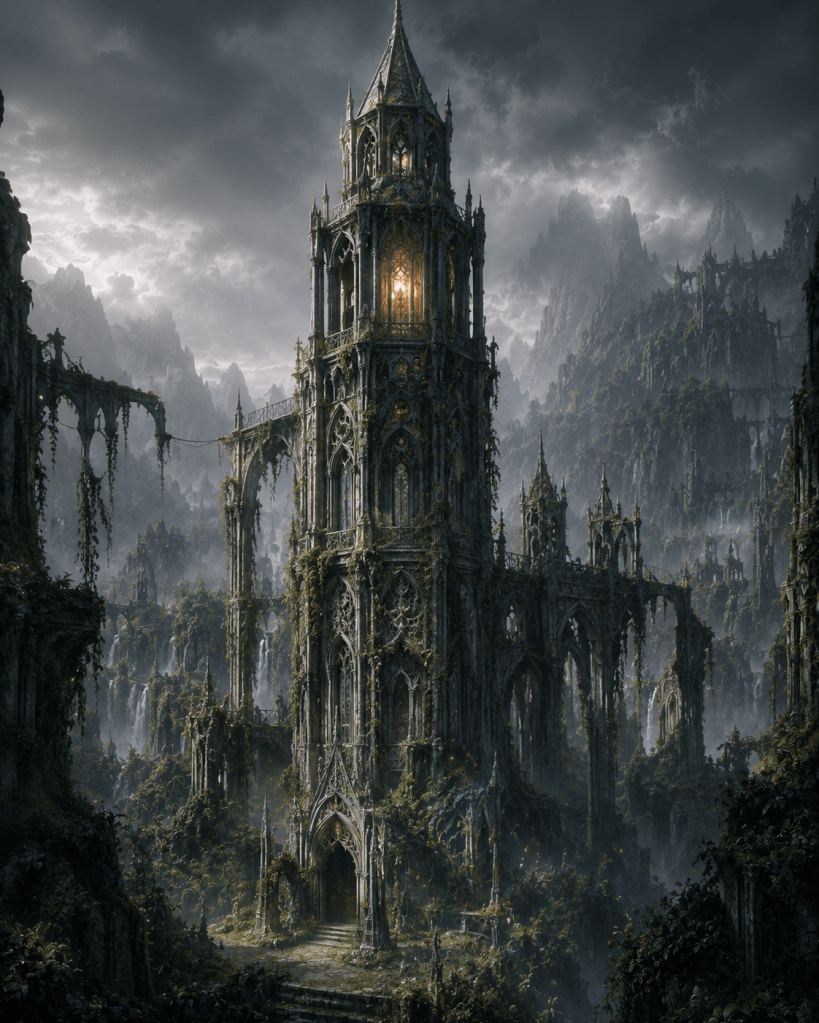
Khyour did not belong to the royal house and had no claim to power. He settled in his own tower, where he gathered surviving manuscripts, part of the royal archive, and objects recovered after the death of the Elmareviirs. He restored some rooms, kept others locked, and allowed the damaged passages between the tower and the rest of the city to become overgrown.
In the lower rooms, Khyour stored books, dried plants, and received students. He taught the Laeg’ini language, healing, the properties of plants, and ways of understanding the behaviour of animals and magical creatures. However, very few were allowed into the upper floors or underground vaults. Even Aldis did not know what his teacher kept in the sealed sections of the tower.
Khyour rarely accepted new students and always chose them himself. Some remained in Godol Khan for a few months, while others studied there for years, but no one could simply arrive at the tower and demand to be taught. He was equally selective about sharing his prophecies and often refused even those prepared to pay generously.
The tower survived in better condition than most of the capital. Travellers passing near the ruins sometimes noticed smoke rising from its upper chimneys, light in the windows, or fresh tracks along the old road. They rarely saw Hyyour himself.
Shortly before the war started by Niam, he left Godol Khan. When Aldis came to the tower before the events of The Tale of the Ice Beast, hoping to ask his teacher to reveal his future, Khyour was no longer there. He had taken some of his belongings, but left behind the books, plants, and most of his working notes, so his departure did not appear permanent.
Rumours later spread that the magister had died while humans were crossing the Ilentil River near the borders of D’alva on the Eastern Border, where the lands of the Oraolё began. No one could confirm the story. His body was never found, and the accounts of his death contradicted one another.
Aldis did not know where his teacher had truly gone. However, he knew Khyour well enough to doubt that he had left the tower without a reason or with no intention of returning.
Aldis Agonalusta
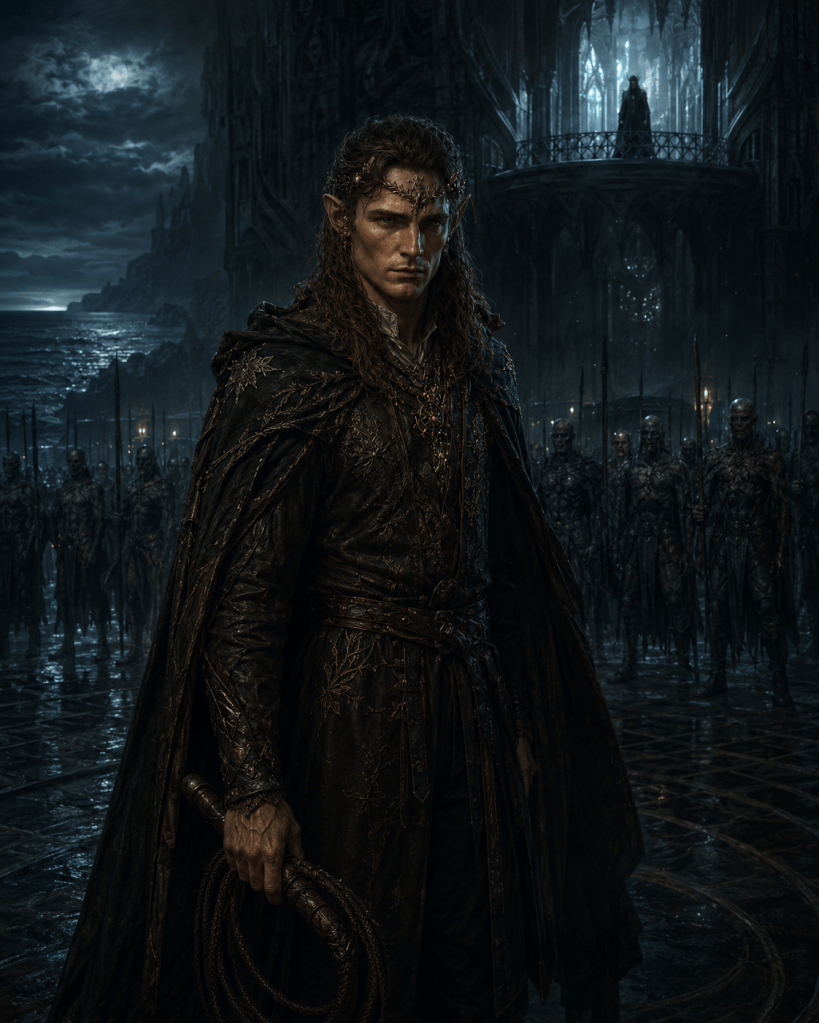
Aldis comes from the noble house of Agonalusta, more commonly known simply as House Lusta. His family did not belong to the royal Elmareviir dynasty, and he therefore had no claim to the throne of Godol Khan.
Aldis spent part of his youth in the Southern Forest, studying under Khyour. He was not a prophet of his teacher’s calibre, but he remembered what he saw, quickly recognised patterns, and knew how to apply his knowledge in situations for which it had not originally been intended.
This became particularly apparent during his service to the Eidasu in Aspile. On Lord Lirhelm’s orders, Aldis trained groups of undead creatures captured in the surrounding lands. Ordinary commands had little effect on them, so he worked with the remnants of habits, fears, and reactions that persisted even after death. He managed to teach the undead to form ranks, wait for orders, and refrain from attacking one another.
That was when Niam first took notice of him.
“You understand animals. The living and the dead. I have been watching you. You made the virdolyaks obey and stand in formation, and you made the khitniks fall silent. Impressive.”
Aldis did not consider this genuine understanding. Living creatures could respond, change their behaviour, and make their own choices. The undead merely repeated whatever remained from their former lives, and Aldis had learned how to use those remnants.
House Lusta
Aldis has three children: Alanie, Tilleon, and Ilendil. While their father travels, they live in the ancestral home of House Lusta near Dobrashi, among other Saїnna. The house contains family books, old records, genealogies, and some of the knowledge Aldis once received from Khyour.
The children know why their father left the Southern Forest and support him, although they do not always agree with his decisions. Aldis rarely tells them everything that happens during his travels, but he stays in contact with home and returns whenever he has the opportunity.
Like their father, Alanie, Tilleon, and Ilendil did not inherit royal blood. However, they continue one of the oldest Saїnna lineages. Along with its name, they inherited their family’s memories, language, and knowledge of a people who lost their kingdom but retained their history.
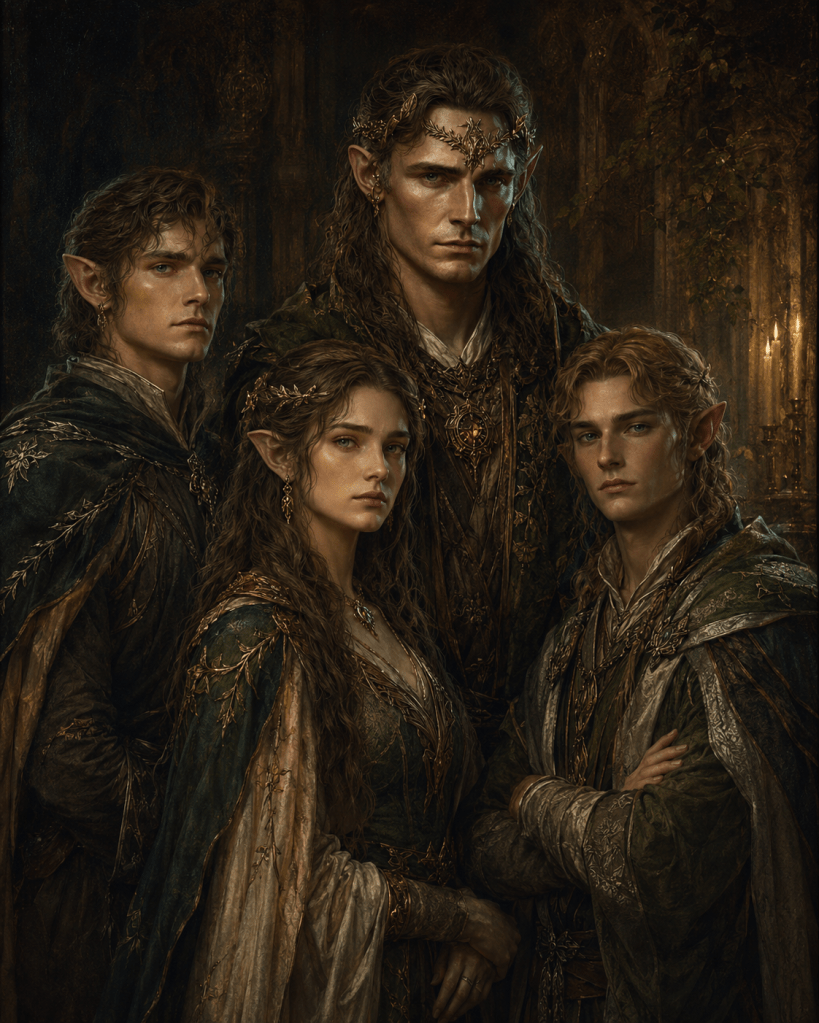
For now, Aldis’s children remain in the Southern Forest and do not take part in his journey. However, House Lusta may not remain separate from the events spreading across the Continent forever.
What Remains
The Saїnna lost Godol Khan, their royal family, and most of their settlements, but their people did not disappear. They still live in small communities throughout the Southern Forest, while some families have gradually settled beyond its borders.
The direct line of Eva’s youngest son ended with House Elmareviir, but many Saїnna still carry a part of his blood. They speak Laeg’ini, keep genealogical records, preserve old books, and pass their knowledge on to their children. The Saїnna legacy has not disappeared.
The settlements manage their own affairs, while the old houses maintain connections between their communities. Godol Khan was never rebuilt and remains a reminder of the tragic end of the Great Sundering, although the Saїnna still visit its ruins and know the roads leading to the city.
Today, the Saїnna remain a scattered people connected by their shared origins, language, and ties between their houses.
We have now spoken about the Eidasu and the Saїnna, which leaves only the Oraolё, the people of the White City, dragons, and golden nightingales.
Their kingdom’s final day will be told in The Nightingales of Lavelen, coming on August 1.
P.S. For now – in Ukrainian, but I will work on translation as well.
~~~
Саїнна: Алдіс – учень пророка
Ми вже говорили про Едасу – давній і могутній народ, який досі прагне повернути собі колишню велич. Тепер настав час згадати наймолодшу з трьох гілок дітей Еви.
Саїнна
Або Заїїна, як їх частіше називають склави. Серед інших людей можна почути й коротший варіант – Зайна.
Про них відомо значно менше, ніж про Едасу чи Ораолів. У Саїнна більше немає власної держави, короля або численного війська. Їхню столицю зруйновано, королівська лінія давно перервалася, а ті, кому вдалося пережити загибель Годол Кхану, розійшлися світом.
І все ж Саїнна не зникли. Одного з них ми знаємо досить добре – це Алдіс Агоналуста, або просто Алдіс з роду Луста, одного з героїв “Сказанки про Крижаного Звіра”.
Tenne’oi Foret – Південний Ліс
Після Великого Розколу, яким завершилася перша братерська війна, Саїнна оселилися далеко на півдні Континенту, серед старих лісів, річкових долин і відрогів Гортмрату. Цей край отримав назву Теннетої Форет, або Південний Ліс.
Саїнна майже не будували великих міст. Їхні поселення ховалися поміж деревами, на берегах річок і лісових терасах. Будівлі огинали старі стовбури, мости з’єднували береги ущелин, а вода вільно проходила крізь нижні рівні поселень.
Єдиним справді великим містом була їхня столиця – Годол Кхан.
Його назва мовою Лаег’їні означає приблизно “Фортеця-замок”, і вона добре передає сутність міста. Годол Кхан був водночас столицею і добре укріпленою цитаделлю. Його світлі вежі здіймалися над Південним Лісом, річки проходили крізь тераси й сади, а високі мости з’єднували окремі частини міста над водоспадами та проваллями.
Саїнна не вважали, що побудували Годол Кхан серед лісу. Вони казали, що місто виросло разом із ним.
Народ, що вмів слухати
Серед трьох гілок дітей Еви Саїнна найтісніше пов’язували своє життя з лісом. Вони мали світлу шкіру, гострі вуха й переважно зелені очі, а їхнє волосся могло бути майже будь-якого природного відтінку: від світлого золота до темно-каштанового.
Вони вірили, що живий світ неможливо по-справжньому підкорити. Його можна налякати, змусити коритися або зламати, але така влада завжди залишатиметься тимчасовою. Тому їхня магія починалася з уміння слухати все навколо.
Чарівники Саїнна вивчали рослини, тварин і все, у чому зберігалася бодай частина життя. Вони помічали страх, біль і звички істоти, знаходили причину її поведінки й лише тоді намагалися вплинути на неї.
Саме тому серед Саїнна було так багато цілителів, провидців і знавців істот, яких інші народи вважали дикими або небезпечними. Деякі з них уміли відчувати навіть сліди того, що вже померло.
Можливо, саме ця здатність згодом допомогла Алдісу зробити те, що здавалося неможливим навіть Ніаму.
Королівський рід Елмаревіїр
До падіння Годол Кхану Саїнна правив рід Елмаревіїр. Право на престол переходило до старшої дитини незалежно від статі, тому серед володарів Південного Лісу були як королі, так і королеви.
Останнім коронованим правителем став Валдоріан III Елмаревіїр. Разом із королевою Елеріанною Віхмутар він мав трьох дітей: старшого сина й спадкоємця Ілмандора, хранительку королівських архівів Аеларіель та молодшого сина Лаурінделя, який навчався у магістра Хьйоура.
Жоден із них не залишив нащадків.
Королівський прапор Саїнна мав темно-зелене полотнище. У його центрі срібне дерево зросталося з брамою Годол Кхану, а три верхні гілки нагадували водночас вежі й корону. Над ними сяяла біла крапля, пов’язана з благословенням Еви, а внизу сходилися дві срібно-блакитні річки.
Після загибелі королівської родини золота облямівка зникла зі знамена, а одну з трьох гілок почали зображати надламаною. Так знак королівської влади перетворився на символ пам’яті про державу, якої більше не існувало.
Падіння Годол Кхану
Годол Кхан пав у 2214 році Шостої ери.
Війна Едасу проти Саїнна завершилася знищенням столиці, загибеллю королівського роду й розпорошенням народу, який століттями називав Південний Форет своїм домом.
Король Валдоріан загинув під час захисту міста. Після нього правителем мав стати Ілмандор, але провести коронацію вже не встигли. Він прийняв командування воїнами Саїнна й загинув невдовзі після батька.
Аеларіель залишалася в королівських архівах майже до останнього. Завдяки їй частину книг, родоводів і давніх записів вдалося врятувати, однак сама вона з Годол Кхану не вийшла.
Останнім законним спадкоємцем став сімнадцятирічний Лауріндель. Він був учнем Хьйоура й уже володів частиною давніх знань Саїнна. Що саме сталося з ним під час падіння столиці, уцілілі розповідали по-різному.
Відомо лише, що Лауріндель загинув останнім із роду Елмаревіїр, пробувши спадкоємцем престолу лише кілька годин. Після його смерті королівська лінія Саїнна перервалася, а нового володаря вони так і не обрали.
Хьйоур
Після падіння столиці Хьйоур став єдиним, хто залишився постійно жити серед її руїн. Він був одним із магів Саїнна й найсильнішим пророком серед тих, хто жив на той час.
До королівського роду Хьйоур не належав і на владу не претендував. Він оселився у власній вежі, зібрав туди вцілілі рукописи, частину королівського архіву й речі, які вдалося врятувати після загибелі Елмаревіїрів. Деякі приміщення він відновив, інші залишив замкненими, а пошкоджені переходи між вежею та рештою міста поступово заросли.
У нижніх кімнатах Хьйоур зберігав книги, сушив рослини й приймав учнів. Він навчав мови Лаег’їні, лікування, властивостей рослин і способів розуміти поведінку тварин та магічних істот. Проте доступ до верхніх поверхів і підземних сховищ мали далеко не всі. Навіть Алдіс не знав, що саме вчитель зберігав у зачинених частинах вежі.
Хьйоур рідко брав нових учнів і обирав їх сам. Одні залишалися в Годол Кхані на кілька місяців, інші навчалися роками, але ніхто не міг просто прийти до вежі й вимагати знань. Пророцтвами він також не ділився без причини й часто відмовляв навіть тим, хто був готовий добре заплатити.
Вежа вціліла краще за більшість будівель столиці. Мандрівники, які проходили поблизу руїн, іноді помічали дим із верхніх труб, світло у вікнах або свіжі сліди на старій дорозі. Самого Хьйоура вони бачили рідко.
Незадовго до початку війни, яку роза’язав Ніам, він залишив Годол Кхан. Коли Алдіс прийшов до вежі перед подіями “Сказанки”, сподіваючись попросити вчителя відкрити йому майбутнє, то не застав його на місці. Частину речей Хьйоур забрав, але книги, рослини й більшість робочих записів залишилися, тому його від’їзд не здавався остаточним.
Згодом поширилися чутки, що магістр загинув під час форсування людьми річки Ілентіль біля кордонів Далва на Східному Кордоні – початку земель Ораолів. Підтвердити це ніхто не зміг: тіла не знайшли, а обставини його загибелі в різних розповідях не збігалися.
Алдіс не знав, куди насправді вирушив учитель. Однак він добре знав Хьйоура й сумнівався, що той залишив вежу випадково або без наміру повернутися.
Алдіс Агоналуста
Алдіс походить зі шляхетного роду Агоналуста, який частіше називають просто родом Луста. До королівської династії Елмаревіїрів його родина не належала, тому жодних прав на престол Годол Кхану він не мав.
Частину юності Алдіс провів у Південному Лісі, де навчався у Хьйоура. Алдіс не був провидцем рівня свого вчителя, однак добре запам’ятовував побачене, швидко знаходив закономірності й умів застосовувати знання в умовах, для яких вони спочатку не призначалися.
Це особливо проявилося під час його служби Едасу в Ашпілі. За наказом лорда Лірхельма Алдіс тренував загони немертвих із навколишніх земель. Звичайні команди на них майже не діяли, тому він працював із залишками звичок, страхів і реакцій, які зберігалися навіть після смерті. Йому вдалося змусити немертвих ставати у стрій, чекати наказу й не нападати одне на одного.
Саме тоді на нього звернув увагу Ніам.
— Ти знаєшся на тваринах. На живих і мертвих. Я спостерігав за тобою. Ти змусив вирдоляків слухатися й стати у стрій, а хітніків — замовкнути. Вражаюче.
Алдіс не вважав це справжнім порозумінням. Живі істоти могли відповідати, змінювати поведінку й робити власний вибір. Немертві лише повторювали те, що залишилося в них від попереднього життя, і Алдіс навчився користуватися цими залишками.
Рід Луста
У Алдіса є троє дітей: Аланіє, Тіллєон та Іленділь. Поки батько мандрує, вони живуть у родовому домі Луста неподалік Добрашів, серед інших Саїнна. Там зберігаються сімейні книги, старі записи, родоводи й частина знань, які Алдіс свого часу отримав від Хьйоура.
Діти знають, чому батько залишив Південний Ліс, і підтримують його, хоча не завжди погоджуються з його рішеннями. Алдіс рідко розповідає їм про все, що трапляється під час мандрів, але підтримує з домом зв’язок і повертається туди щоразу, коли має таку можливість.
Аланіє, Тіллєон та Іленділь як і їх батько не успадкували королівської крові, проте продовжують один із найдавніших родів Саїнна. Разом із його ім’ям їм дісталися родинна пам’ять, мова та знання про народ, який утратив державу, але не власну історію.
Наразі діти Алдіса залишаються в Південному Лісі й не беруть участі в його мандрівці. Утім, навряд чи рід Луста ще довго залишатиметься осторонь подій, що поступово охоплюють увесь Континент.
Те, що залишилося
Саїнна втратили Годол Кхан, королівську родину й більшість поселень, але їхній народ не зник. Вони досі живуть у невеликих поселеннях по всьому Південному Лісу, а окремі родини з часом оселилися за його межами.
Пряма лінія наймолодшого сина Еви обірвалася разом із родом Елмаревіїр, однак у багатьох Саїнна досі зберігається частина його крові. Вони розмовляють Лаег’їні, ведуть родоводи, зберігають старі книги й передають дітям знання. Ми можемо сказати, що спадщина Саїнна нікуди не зникла.
Поселення самостійно розв’язують свої справи, а давні роди підтримують зв’язок між громадами. Годол Кхан так і не відбудували, як пам’ять про трагічний кінець великого Розколу, хоча Саїнна досі відвідують його руїни й знають дороги, якими можна дістатися до міста.
Нині Саїнна залишаються розпорошеним народом, об’єднаним спільним походженням, мовою та зв’язками між родами.
Про Едасу й Саїнна ми вже поговорили, тож наступними залишаються лише Ораолі. Народ Білого міста, драконів і золотих солов’їв.
Саме про останній день королівства Ораолів розповість оповідання “Солов’ї Лавелену”, яке вийде 1 серпня.

