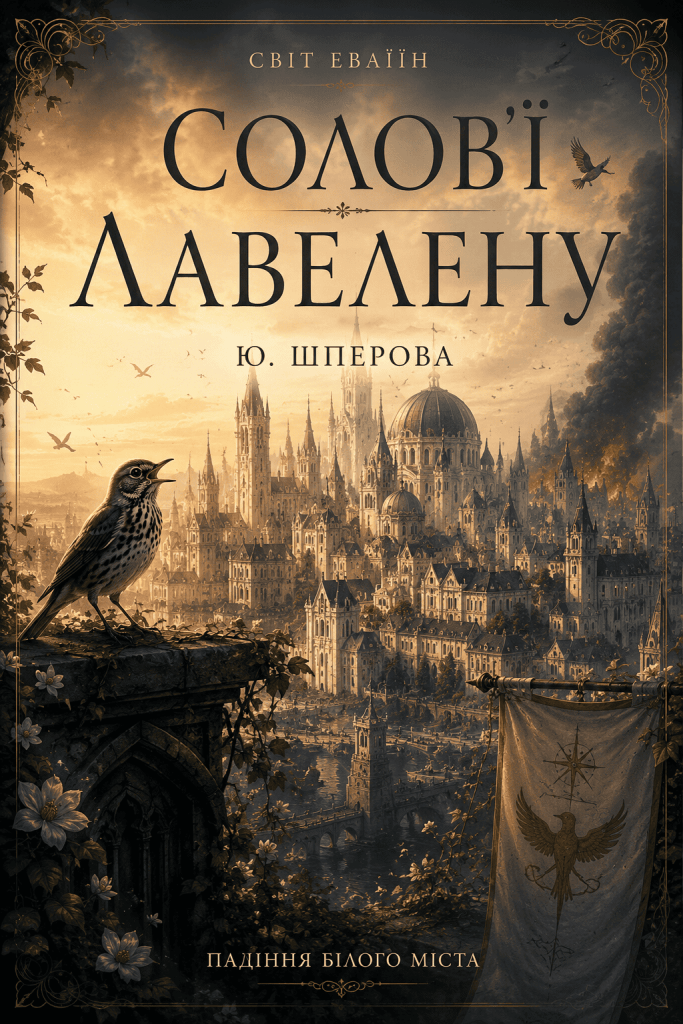
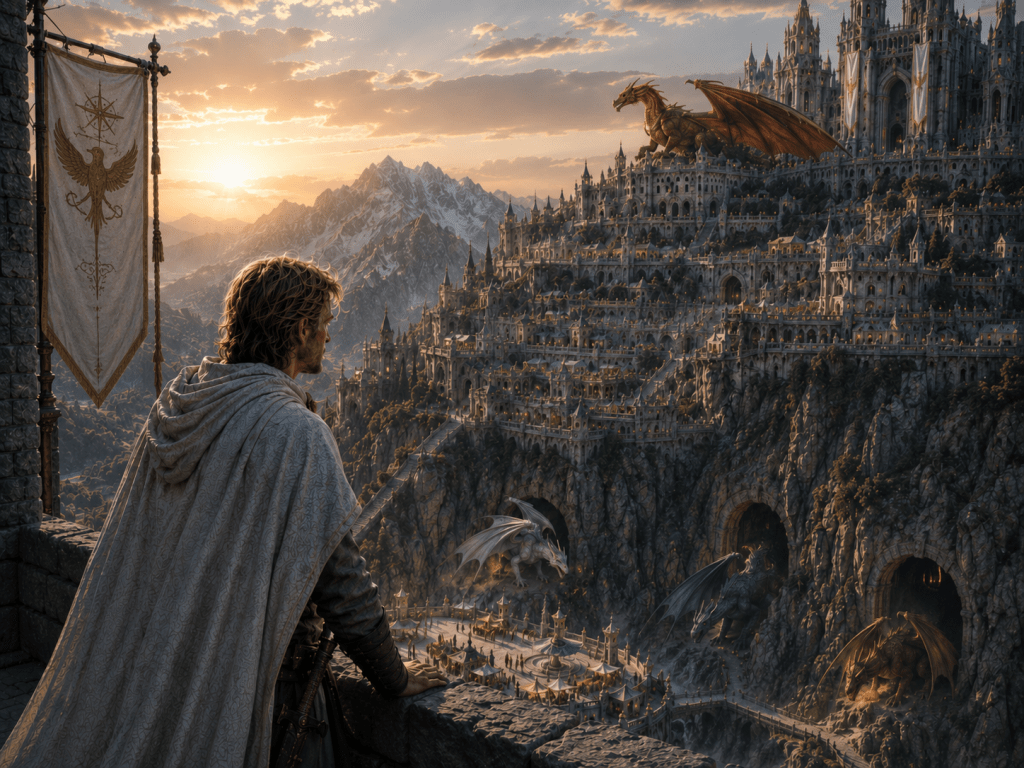
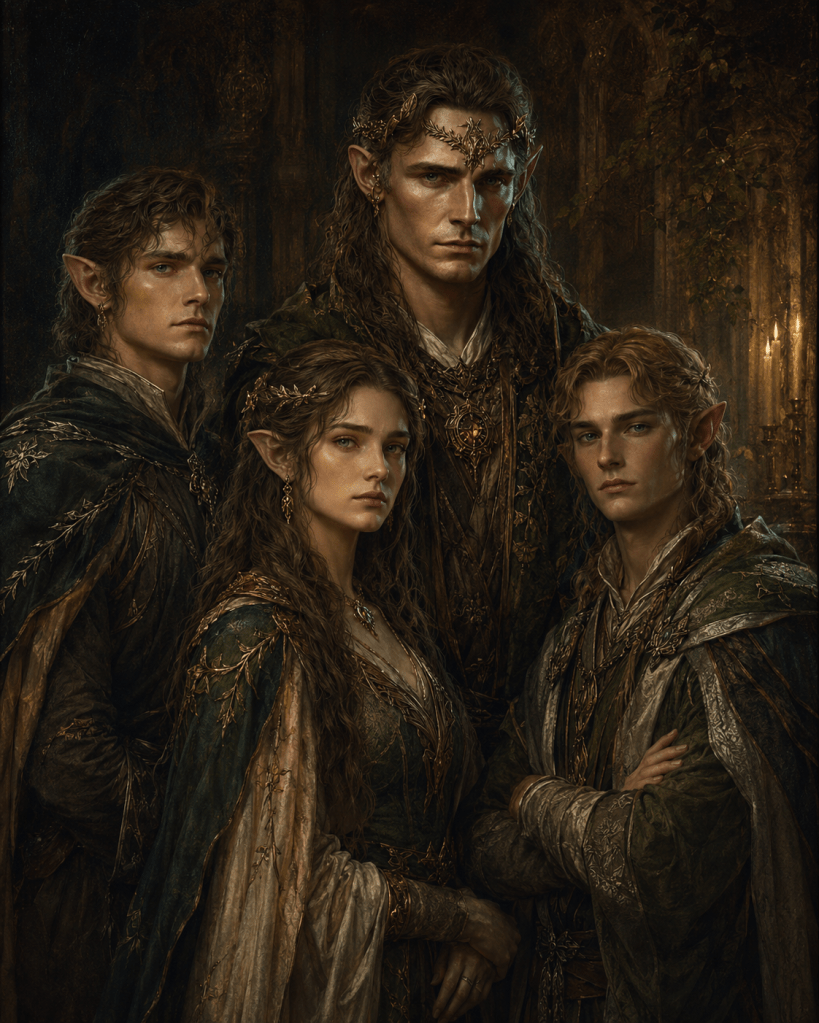
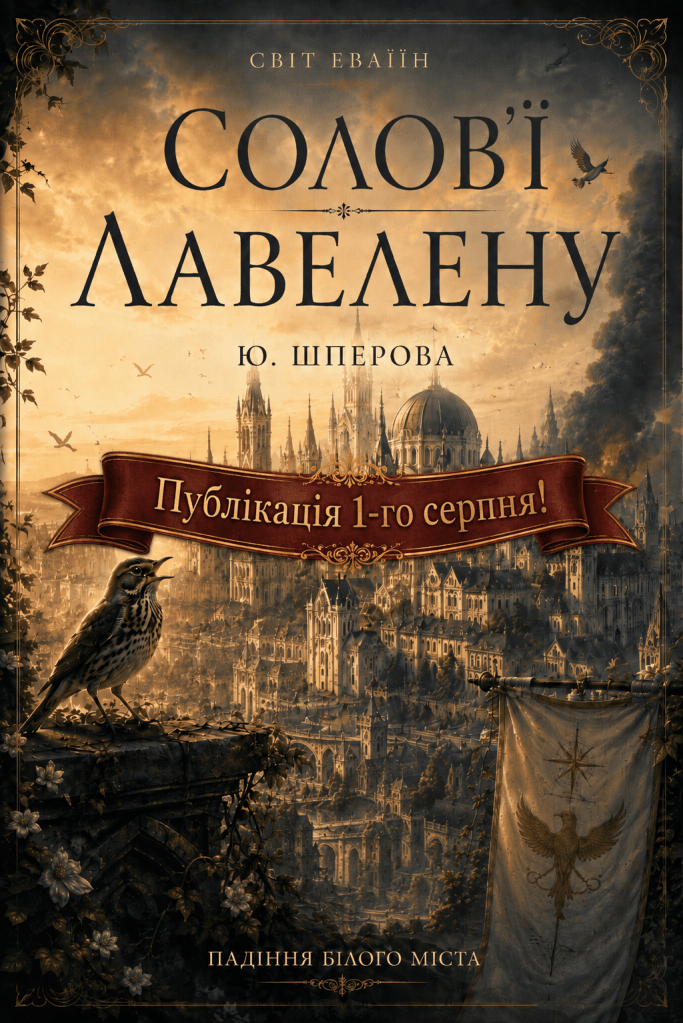
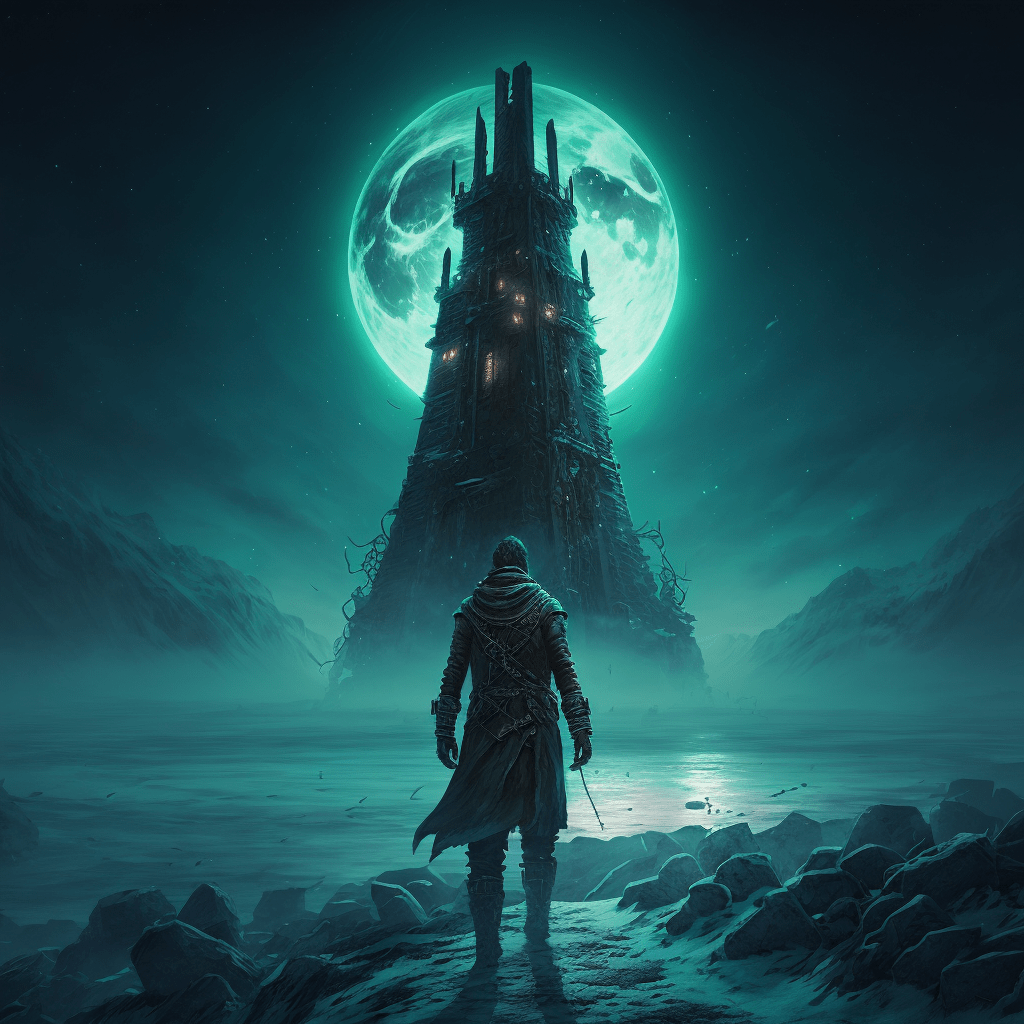
Солов’ї ще співають над садами. Дракони кружляють над білими вежами. На королівських стягах сяє золото, а мешканці Лавелену прокидаються, не знаючи, що бачать своє місто таким востаннє.
Якщо вам сподобалася “Сказанка про Крижаного Звіра”, можливо, вам захочеться повернутися у цей світ – задовго до того, як брати Волошини вирушили у свою подорож.
“Солов’ї Лавелену” – історія про один день із життя прихованого міста Ораолів.
День, що почався зі співу солов’їв.
І став останнім в історії Білого Міста.
Запрошую до Лавелену. Поки його брами ще відчинені.
We have already spoken about the Eidasu, an ancient and powerful people who still seek to reclaim their former greatness. Now it is time to introduce the youngest of the three branches descended from Ewa’s children.
Saїnna
Or Zaїnna, as the Sklavs more commonly call them. Among other peoples, the shorter name Zayna can also be heard.
Much less is known about them than about the Eidasu or the Oraolё. The Saїnna no longer have a state of their own, a king, or a large army. Their capital was destroyed, their royal line ended long ago, and those who survived the fall of Godol Khan scattered across the Continent.
Yet the Saїnna did not disappear. We already know one of them quite well: Aldis Agonalusta, or simply Aldis of House Lusta, one of the characters in The Tale of the Ice Beast.
Tenne’oi Foret — the Southern Forest
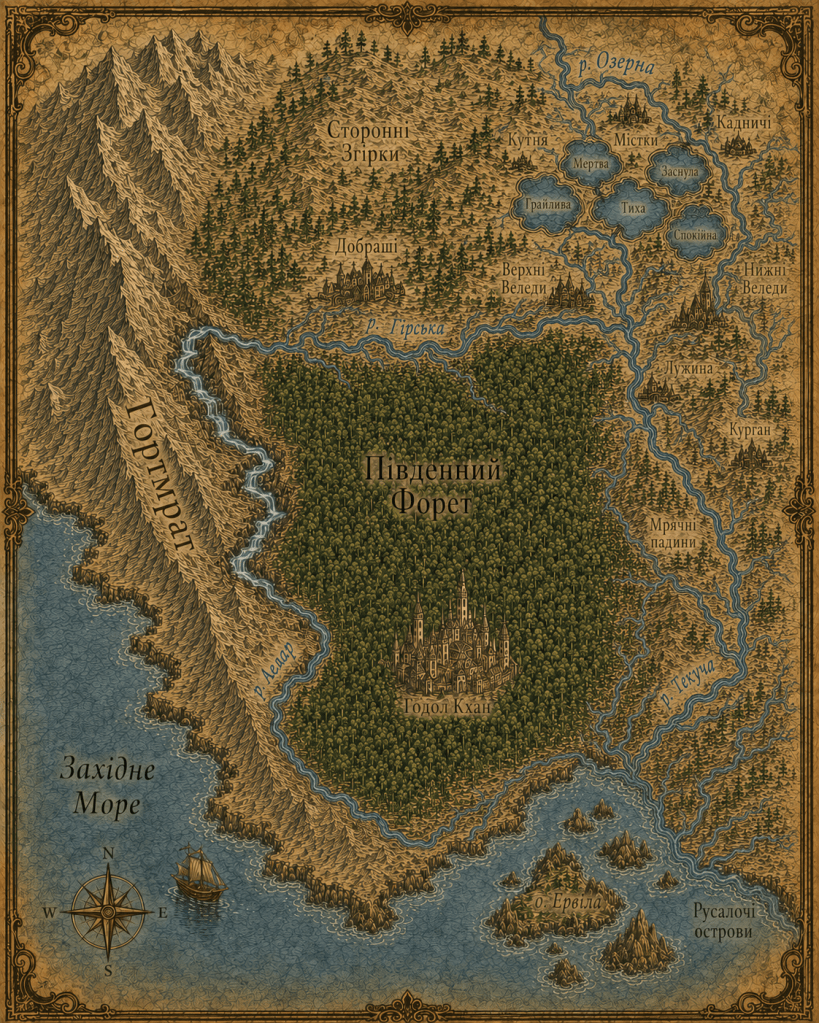
After the Great Sundering that ended the first war between the brothers, the Saїnna settled in the far south of the Continent, among ancient forests, river valleys, and the foothills of Gortmrat. The region became known as Tenne’oi Foret, or the Southern Forest.
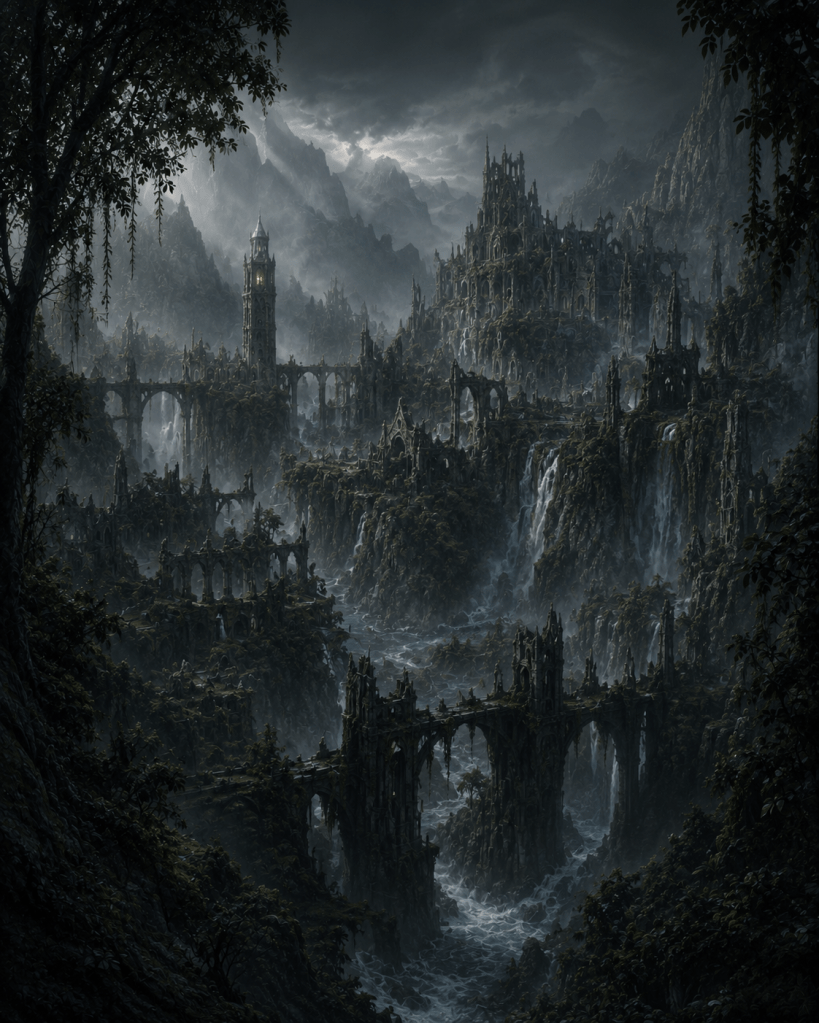
The Saїnna rarely built large cities. Their settlements were hidden among the trees, along riverbanks and forest terraces. Buildings curved around ancient trunks, bridges connected the sides of ravines, and water flowed freely through the lower levels of their settlements.
Their only truly large city was their capital, Godol Khan.
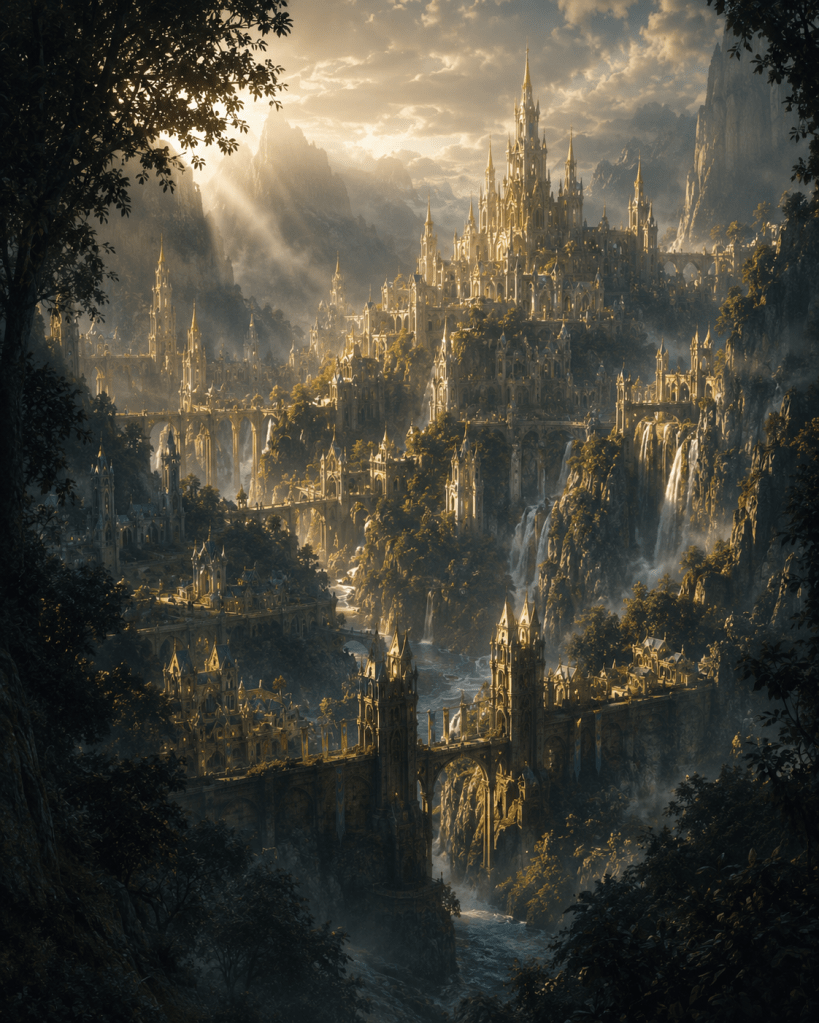
In Laeg’ini, its name roughly means “Fortress-Castle,” which describes the city well. Godol Khan was both a capital and a heavily fortified citadel. Its pale towers rose above the Southern Forest, rivers flowed through its terraces and gardens, and high bridges connected different parts of the city over waterfalls and deep ravines.
The Saїnna did not believe they had built Godol Khan within the forest. They said the city had grown alongside it.
The People Who Knew How to Listen
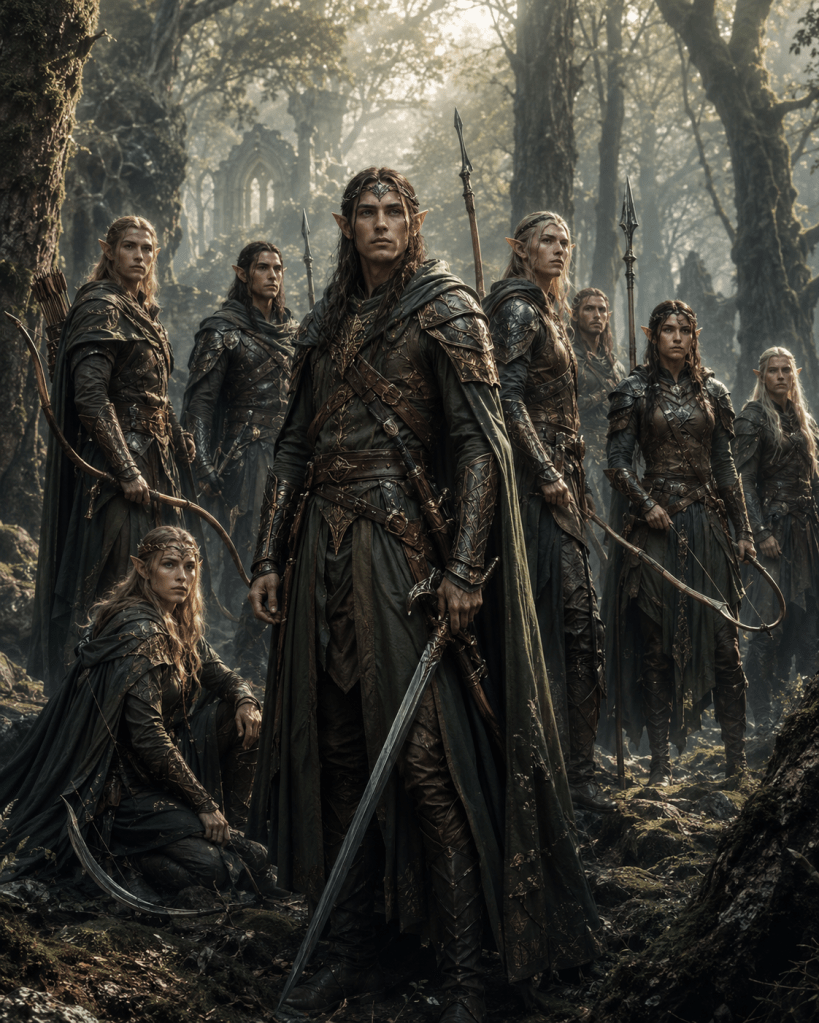
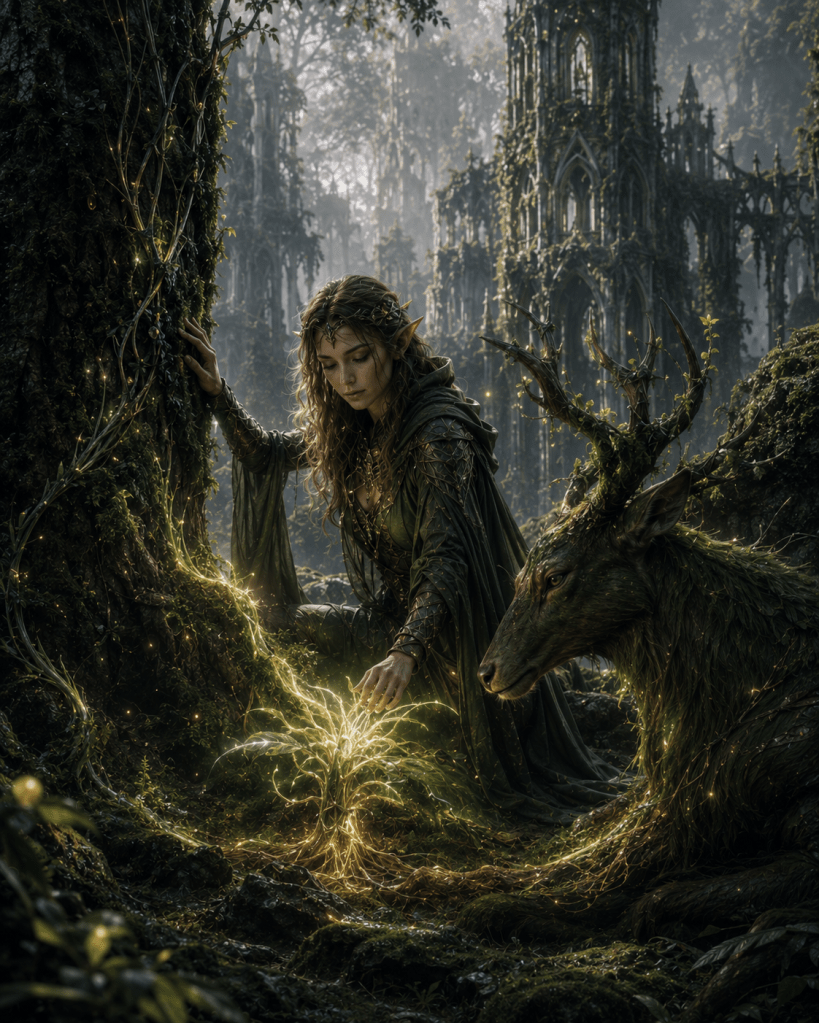
Of the three branches descended from Ewa’s children, the Saїnna tied their lives most closely to the forest. They had fair skin, pointed ears, and predominantly green eyes, while their hair could be almost any natural shade, from pale gold to dark chestnut.
They believed that the living world could never truly be conquered. It could be frightened, forced into obedience, or broken, but such control would always be temporary. That was why their magic began with learning how to listen to everything around them.
Saїnna mages studied plants, animals, and anything that still carried even the smallest trace of life. They noticed a creature’s fear, pain, and habits, searched for the reason behind its behaviour, and only then attempted to influence it.
This was why the Saїnna had so many healers, prophets, and experts in creatures that other peoples considered wild or dangerous. Some of them could even sense traces of things that had already died.
Perhaps this ability later allowed Aldis to achieve something that even Niam had considered impossible.
The Royal House of Elmareviir
Before the fall of Godol Khan, the Saїnna were ruled by House Elmareviir. The right to the throne passed to the eldest child regardless of gender, so the Southern Forest had been ruled by both kings and queens.
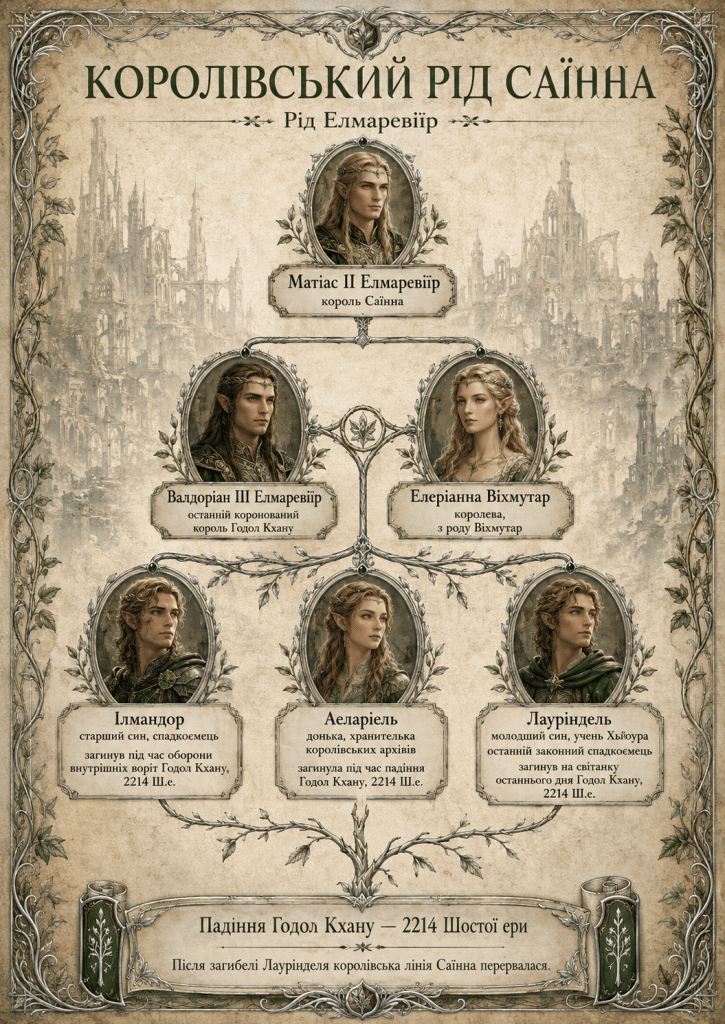
The last crowned ruler was Valdorian III Elmareviir. He and Queen Elerianna Vikhmutar had three children: their eldest son and heir, Ilmandor; Aelariel, keeper of the royal archives; and their youngest son, Laurindel, who studied under Magister Khyour.
None of them left descendants.
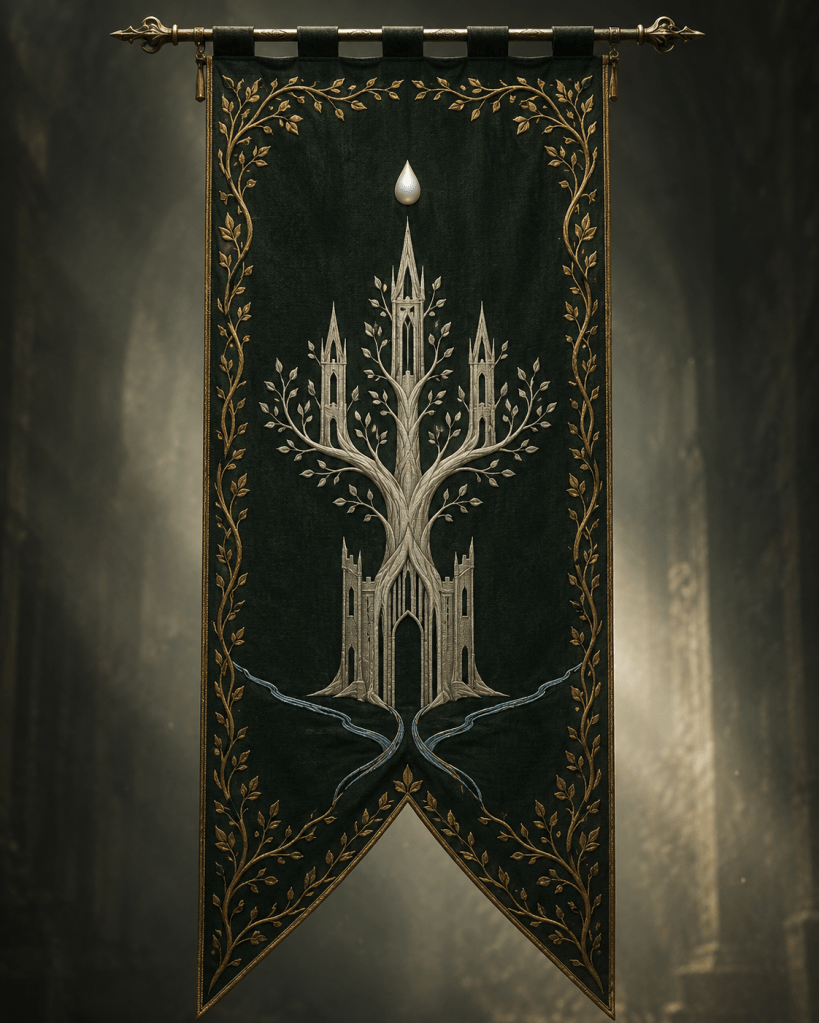
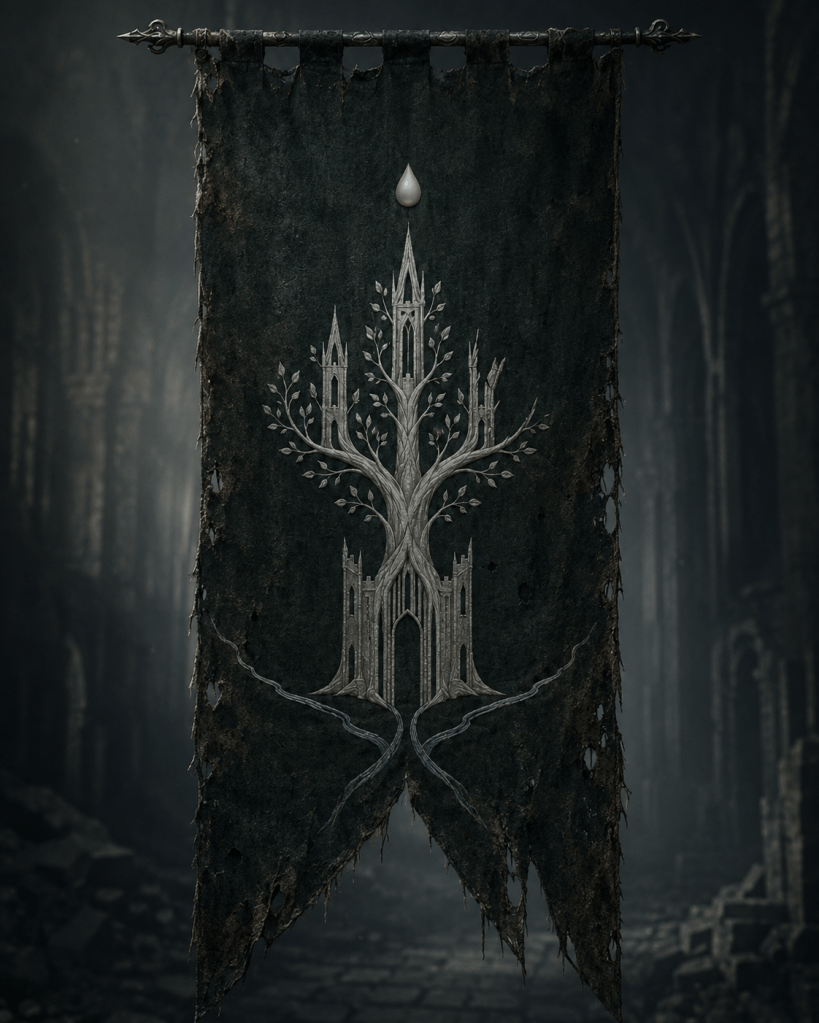
The Saїnna royal banner had a dark green field. At its centre, a silver tree merged with the gates of Godol Khan, while its three upper branches resembled both towers and a crown. Above them shone a white droplet associated with Eva’s blessing, and two silver-blue rivers met below.
After the death of the royal family, the golden border was removed from the banner, and one of the three branches began to be shown as broken. The symbol of royal authority became a reminder of a kingdom that no longer existed.
The Fall of Godol Khan
Godol Khan fell in 2214 of the Sixth Era.
The war between the Eidasu and the Saїnna ended with the destruction of the capital, the death of the royal house, and the dispersal of a people who had called the Southern Forest their home for centuries.
King Valdorian was killed while defending the city. Ilmandor was meant to succeed him, but there was no time for a coronation. He assumed command of the Saїnna warriors and died shortly after his father.
Aelariel remained in the royal archives until nearly the very end. Thanks to her, some of the books, genealogies, and ancient records were saved, but she herself never left Godol Khan.
The last lawful heir was seventeen-year-old Laurindel. He had studied under Khyour and had already mastered some of the Saїnna’s ancient knowledge. Survivors gave conflicting accounts of what happened to him during the fall of the capital.
All that is known for certain is that Laurindel was the last member of House Elmareviir to die, having been heir to the throne for only a few hours. With his death, the Saїnna royal line ended, and they never chose another ruler.
Khyour
After the fall of the capital, Khyour became the only person who continued to live permanently among its ruins. He was one of the Saїnna mages and the most powerful prophet alive at the time.
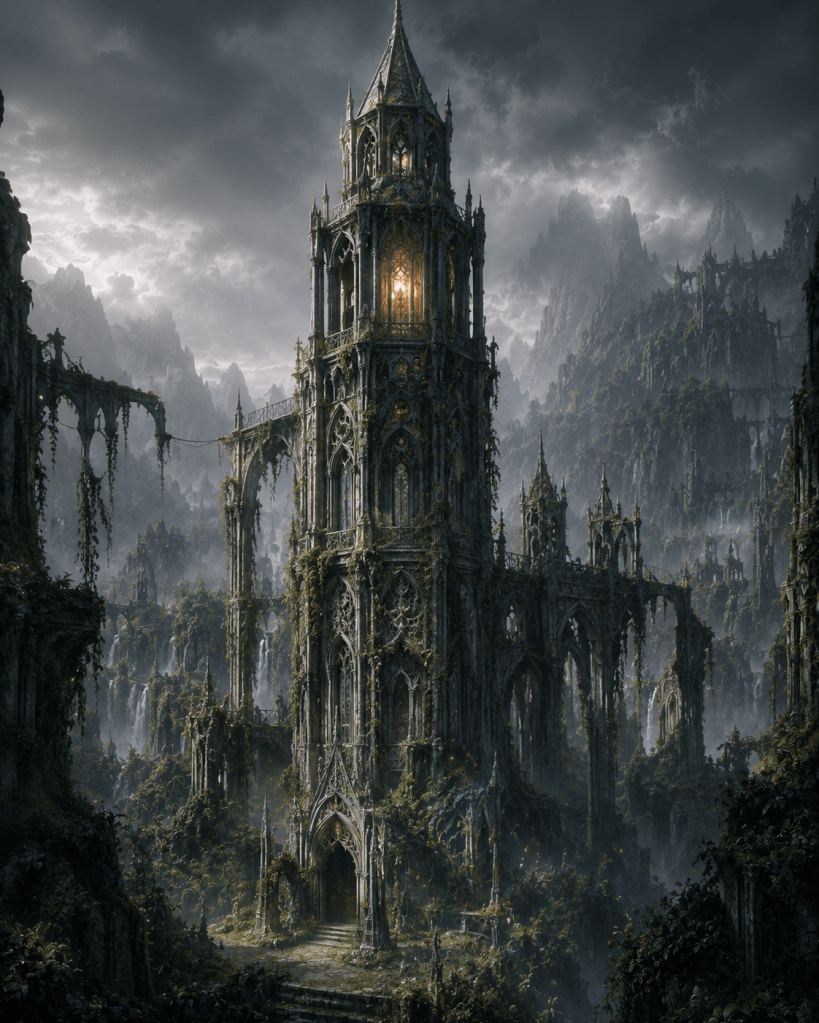
Khyour did not belong to the royal house and had no claim to power. He settled in his own tower, where he gathered surviving manuscripts, part of the royal archive, and objects recovered after the death of the Elmareviirs. He restored some rooms, kept others locked, and allowed the damaged passages between the tower and the rest of the city to become overgrown.
In the lower rooms, Khyour stored books, dried plants, and received students. He taught the Laeg’ini language, healing, the properties of plants, and ways of understanding the behaviour of animals and magical creatures. However, very few were allowed into the upper floors or underground vaults. Even Aldis did not know what his teacher kept in the sealed sections of the tower.
Khyour rarely accepted new students and always chose them himself. Some remained in Godol Khan for a few months, while others studied there for years, but no one could simply arrive at the tower and demand to be taught. He was equally selective about sharing his prophecies and often refused even those prepared to pay generously.
The tower survived in better condition than most of the capital. Travellers passing near the ruins sometimes noticed smoke rising from its upper chimneys, light in the windows, or fresh tracks along the old road. They rarely saw Hyyour himself.
Shortly before the war started by Niam, he left Godol Khan. When Aldis came to the tower before the events of The Tale of the Ice Beast, hoping to ask his teacher to reveal his future, Khyour was no longer there. He had taken some of his belongings, but left behind the books, plants, and most of his working notes, so his departure did not appear permanent.
Rumours later spread that the magister had died while humans were crossing the Ilentil River near the borders of D’alva on the Eastern Border, where the lands of the Oraolё began. No one could confirm the story. His body was never found, and the accounts of his death contradicted one another.
Aldis did not know where his teacher had truly gone. However, he knew Khyour well enough to doubt that he had left the tower without a reason or with no intention of returning.
Aldis Agonalusta
Aldis comes from the noble house of Agonalusta, more commonly known simply as House Lusta. His family did not belong to the royal Elmareviir dynasty, and he therefore had no claim to the throne of Godol Khan.
Aldis spent part of his youth in the Southern Forest, studying under Khyour. He was not a prophet of his teacher’s calibre, but he remembered what he saw, quickly recognised patterns, and knew how to apply his knowledge in situations for which it had not originally been intended.
This became particularly apparent during his service to the Eidasu in Aspile. On Lord Lirhelm’s orders, Aldis trained groups of undead creatures captured in the surrounding lands. Ordinary commands had little effect on them, so he worked with the remnants of habits, fears, and reactions that persisted even after death. He managed to teach the undead to form ranks, wait for orders, and refrain from attacking one another.
That was when Niam first took notice of him.
“You understand animals. The living and the dead. I have been watching you. You made the virdolyaks obey and stand in formation, and you made the khitniks fall silent. Impressive.”
Aldis did not consider this genuine understanding. Living creatures could respond, change their behaviour, and make their own choices. The undead merely repeated whatever remained from their former lives, and Aldis had learned how to use those remnants.
House Lusta
Aldis has three children: Alanie, Tilleon, and Ilendil. While their father travels, they live in the ancestral home of House Lusta near Dobrashi, among other Saїnna. The house contains family books, old records, genealogies, and some of the knowledge Aldis once received from Khyour.
The children know why their father left the Southern Forest and support him, although they do not always agree with his decisions. Aldis rarely tells them everything that happens during his travels, but he stays in contact with home and returns whenever he has the opportunity.
Like their father, Alanie, Tilleon, and Ilendil did not inherit royal blood. However, they continue one of the oldest Saїnna lineages. Along with its name, they inherited their family’s memories, language, and knowledge of a people who lost their kingdom but retained their history.
For now, Aldis’s children remain in the Southern Forest and do not take part in his journey. However, House Lusta may not remain separate from the events spreading across the Continent forever.
What Remains
The Saїnna lost Godol Khan, their royal family, and most of their settlements, but their people did not disappear. They still live in small communities throughout the Southern Forest, while some families have gradually settled beyond its borders.
The direct line of Eva’s youngest son ended with House Elmareviir, but many Saїnna still carry a part of his blood. They speak Laeg’ini, keep genealogical records, preserve old books, and pass their knowledge on to their children. The Saїnna legacy has not disappeared.
The settlements manage their own affairs, while the old houses maintain connections between their communities. Godol Khan was never rebuilt and remains a reminder of the tragic end of the Great Sundering, although the Saїnna still visit its ruins and know the roads leading to the city.
Today, the Saїnna remain a scattered people connected by their shared origins, language, and ties between their houses.
We have now spoken about the Eidasu and the Saїnna, which leaves only the Oraolё, the people of the White City, dragons, and golden nightingales.
Their kingdom’s final day will be told in The Nightingales of Lavelen, coming on August 1.
P.S. For now – in Ukrainian, but I will work on translation as well.
~~~
Саїнна: Алдіс – учень пророка
Ми вже говорили про Едасу – давній і могутній народ, який досі прагне повернути собі колишню велич. Тепер настав час згадати наймолодшу з трьох гілок дітей Еви.
Саїнна
Або Заїїна, як їх частіше називають склави. Серед інших людей можна почути й коротший варіант – Зайна.
Про них відомо значно менше, ніж про Едасу чи Ораолів. У Саїнна більше немає власної держави, короля або численного війська. Їхню столицю зруйновано, королівська лінія давно перервалася, а ті, кому вдалося пережити загибель Годол Кхану, розійшлися світом.
І все ж Саїнна не зникли. Одного з них ми знаємо досить добре – це Алдіс Агоналуста, або просто Алдіс з роду Луста, одного з героїв “Сказанки про Крижаного Звіра”.
Tenne’oi Foret – Південний Ліс
Після Великого Розколу, яким завершилася перша братерська війна, Саїнна оселилися далеко на півдні Континенту, серед старих лісів, річкових долин і відрогів Гортмрату. Цей край отримав назву Теннетої Форет, або Південний Ліс.
Саїнна майже не будували великих міст. Їхні поселення ховалися поміж деревами, на берегах річок і лісових терасах. Будівлі огинали старі стовбури, мости з’єднували береги ущелин, а вода вільно проходила крізь нижні рівні поселень.
Єдиним справді великим містом була їхня столиця – Годол Кхан.
Його назва мовою Лаег’їні означає приблизно “Фортеця-замок”, і вона добре передає сутність міста. Годол Кхан був водночас столицею і добре укріпленою цитаделлю. Його світлі вежі здіймалися над Південним Лісом, річки проходили крізь тераси й сади, а високі мости з’єднували окремі частини міста над водоспадами та проваллями.
Саїнна не вважали, що побудували Годол Кхан серед лісу. Вони казали, що місто виросло разом із ним.
Народ, що вмів слухати
Серед трьох гілок дітей Еви Саїнна найтісніше пов’язували своє життя з лісом. Вони мали світлу шкіру, гострі вуха й переважно зелені очі, а їхнє волосся могло бути майже будь-якого природного відтінку: від світлого золота до темно-каштанового.
Вони вірили, що живий світ неможливо по-справжньому підкорити. Його можна налякати, змусити коритися або зламати, але така влада завжди залишатиметься тимчасовою. Тому їхня магія починалася з уміння слухати все навколо.
Чарівники Саїнна вивчали рослини, тварин і все, у чому зберігалася бодай частина життя. Вони помічали страх, біль і звички істоти, знаходили причину її поведінки й лише тоді намагалися вплинути на неї.
Саме тому серед Саїнна було так багато цілителів, провидців і знавців істот, яких інші народи вважали дикими або небезпечними. Деякі з них уміли відчувати навіть сліди того, що вже померло.
Можливо, саме ця здатність згодом допомогла Алдісу зробити те, що здавалося неможливим навіть Ніаму.
Королівський рід Елмаревіїр
До падіння Годол Кхану Саїнна правив рід Елмаревіїр. Право на престол переходило до старшої дитини незалежно від статі, тому серед володарів Південного Лісу були як королі, так і королеви.
Останнім коронованим правителем став Валдоріан III Елмаревіїр. Разом із королевою Елеріанною Віхмутар він мав трьох дітей: старшого сина й спадкоємця Ілмандора, хранительку королівських архівів Аеларіель та молодшого сина Лаурінделя, який навчався у магістра Хьйоура.
Жоден із них не залишив нащадків.
Королівський прапор Саїнна мав темно-зелене полотнище. У його центрі срібне дерево зросталося з брамою Годол Кхану, а три верхні гілки нагадували водночас вежі й корону. Над ними сяяла біла крапля, пов’язана з благословенням Еви, а внизу сходилися дві срібно-блакитні річки.
Після загибелі королівської родини золота облямівка зникла зі знамена, а одну з трьох гілок почали зображати надламаною. Так знак королівської влади перетворився на символ пам’яті про державу, якої більше не існувало.
Падіння Годол Кхану
Годол Кхан пав у 2214 році Шостої ери.
Війна Едасу проти Саїнна завершилася знищенням столиці, загибеллю королівського роду й розпорошенням народу, який століттями називав Південний Форет своїм домом.
Король Валдоріан загинув під час захисту міста. Після нього правителем мав стати Ілмандор, але провести коронацію вже не встигли. Він прийняв командування воїнами Саїнна й загинув невдовзі після батька.
Аеларіель залишалася в королівських архівах майже до останнього. Завдяки їй частину книг, родоводів і давніх записів вдалося врятувати, однак сама вона з Годол Кхану не вийшла.
Останнім законним спадкоємцем став сімнадцятирічний Лауріндель. Він був учнем Хьйоура й уже володів частиною давніх знань Саїнна. Що саме сталося з ним під час падіння столиці, уцілілі розповідали по-різному.
Відомо лише, що Лауріндель загинув останнім із роду Елмаревіїр, пробувши спадкоємцем престолу лише кілька годин. Після його смерті королівська лінія Саїнна перервалася, а нового володаря вони так і не обрали.
Хьйоур
Після падіння столиці Хьйоур став єдиним, хто залишився постійно жити серед її руїн. Він був одним із магів Саїнна й найсильнішим пророком серед тих, хто жив на той час.
До королівського роду Хьйоур не належав і на владу не претендував. Він оселився у власній вежі, зібрав туди вцілілі рукописи, частину королівського архіву й речі, які вдалося врятувати після загибелі Елмаревіїрів. Деякі приміщення він відновив, інші залишив замкненими, а пошкоджені переходи між вежею та рештою міста поступово заросли.
У нижніх кімнатах Хьйоур зберігав книги, сушив рослини й приймав учнів. Він навчав мови Лаег’їні, лікування, властивостей рослин і способів розуміти поведінку тварин та магічних істот. Проте доступ до верхніх поверхів і підземних сховищ мали далеко не всі. Навіть Алдіс не знав, що саме вчитель зберігав у зачинених частинах вежі.
Хьйоур рідко брав нових учнів і обирав їх сам. Одні залишалися в Годол Кхані на кілька місяців, інші навчалися роками, але ніхто не міг просто прийти до вежі й вимагати знань. Пророцтвами він також не ділився без причини й часто відмовляв навіть тим, хто був готовий добре заплатити.
Вежа вціліла краще за більшість будівель столиці. Мандрівники, які проходили поблизу руїн, іноді помічали дим із верхніх труб, світло у вікнах або свіжі сліди на старій дорозі. Самого Хьйоура вони бачили рідко.
Незадовго до початку війни, яку роза’язав Ніам, він залишив Годол Кхан. Коли Алдіс прийшов до вежі перед подіями “Сказанки”, сподіваючись попросити вчителя відкрити йому майбутнє, то не застав його на місці. Частину речей Хьйоур забрав, але книги, рослини й більшість робочих записів залишилися, тому його від’їзд не здавався остаточним.
Згодом поширилися чутки, що магістр загинув під час форсування людьми річки Ілентіль біля кордонів Далва на Східному Кордоні – початку земель Ораолів. Підтвердити це ніхто не зміг: тіла не знайшли, а обставини його загибелі в різних розповідях не збігалися.
Алдіс не знав, куди насправді вирушив учитель. Однак він добре знав Хьйоура й сумнівався, що той залишив вежу випадково або без наміру повернутися.
Алдіс Агоналуста
Алдіс походить зі шляхетного роду Агоналуста, який частіше називають просто родом Луста. До королівської династії Елмаревіїрів його родина не належала, тому жодних прав на престол Годол Кхану він не мав.
Частину юності Алдіс провів у Південному Лісі, де навчався у Хьйоура. Алдіс не був провидцем рівня свого вчителя, однак добре запам’ятовував побачене, швидко знаходив закономірності й умів застосовувати знання в умовах, для яких вони спочатку не призначалися.
Це особливо проявилося під час його служби Едасу в Ашпілі. За наказом лорда Лірхельма Алдіс тренував загони немертвих із навколишніх земель. Звичайні команди на них майже не діяли, тому він працював із залишками звичок, страхів і реакцій, які зберігалися навіть після смерті. Йому вдалося змусити немертвих ставати у стрій, чекати наказу й не нападати одне на одного.
Саме тоді на нього звернув увагу Ніам.
— Ти знаєшся на тваринах. На живих і мертвих. Я спостерігав за тобою. Ти змусив вирдоляків слухатися й стати у стрій, а хітніків — замовкнути. Вражаюче.
Алдіс не вважав це справжнім порозумінням. Живі істоти могли відповідати, змінювати поведінку й робити власний вибір. Немертві лише повторювали те, що залишилося в них від попереднього життя, і Алдіс навчився користуватися цими залишками.
Рід Луста
У Алдіса є троє дітей: Аланіє, Тіллєон та Іленділь. Поки батько мандрує, вони живуть у родовому домі Луста неподалік Добрашів, серед інших Саїнна. Там зберігаються сімейні книги, старі записи, родоводи й частина знань, які Алдіс свого часу отримав від Хьйоура.
Діти знають, чому батько залишив Південний Ліс, і підтримують його, хоча не завжди погоджуються з його рішеннями. Алдіс рідко розповідає їм про все, що трапляється під час мандрів, але підтримує з домом зв’язок і повертається туди щоразу, коли має таку можливість.
Аланіє, Тіллєон та Іленділь як і їх батько не успадкували королівської крові, проте продовжують один із найдавніших родів Саїнна. Разом із його ім’ям їм дісталися родинна пам’ять, мова та знання про народ, який утратив державу, але не власну історію.
Наразі діти Алдіса залишаються в Південному Лісі й не беруть участі в його мандрівці. Утім, навряд чи рід Луста ще довго залишатиметься осторонь подій, що поступово охоплюють увесь Континент.
Те, що залишилося
Саїнна втратили Годол Кхан, королівську родину й більшість поселень, але їхній народ не зник. Вони досі живуть у невеликих поселеннях по всьому Південному Лісу, а окремі родини з часом оселилися за його межами.
Пряма лінія наймолодшого сина Еви обірвалася разом із родом Елмаревіїр, однак у багатьох Саїнна досі зберігається частина його крові. Вони розмовляють Лаег’їні, ведуть родоводи, зберігають старі книги й передають дітям знання. Ми можемо сказати, що спадщина Саїнна нікуди не зникла.
Поселення самостійно розв’язують свої справи, а давні роди підтримують зв’язок між громадами. Годол Кхан так і не відбудували, як пам’ять про трагічний кінець великого Розколу, хоча Саїнна досі відвідують його руїни й знають дороги, якими можна дістатися до міста.
Нині Саїнна залишаються розпорошеним народом, об’єднаним спільним походженням, мовою та зв’язками між родами.
Про Едасу й Саїнна ми вже поговорили, тож наступними залишаються лише Ораолі. Народ Білого міста, драконів і золотих солов’їв.
Саме про останній день королівства Ораолів розповість оповідання “Солов’ї Лавелену”, яке вийде 1 серпня.
Напередодні виходу оповідання “Солов’ї Лавелену”, який, до речі, заплановано на 1 серпня, пропоную трохи більше дізнатися про дітей Еви. І насамперед, про Едасу, і пригадати одного з тих, із ким ми вже зустрічалися у “Сказанці про Крижаного Звіра”.
Е’тіля Імеа. Або просто Гема, як Е’тіль сам просив себе називати.
У самій “Сказанці” ми бачимо лише невелику частину його життя. Проте за Гемом стоїть давній і могутній рід, численні брати й сестри, віддалені землі, родові обов’язки та історія, що простягається далеко за межі однієї розповіді.
Рід Імеа, як і всі інші роди гілки Едасу, веде своє походження від Арона – другого сина Еви й Ірна, хранителя Східних Гір. За переказами, саме він взяв собі за дружину темношкіру чорнооку мисливицю з гірських племен Найрі. Від цього союзу й пішов народ Eidasu.
Кажуть, Едасу успадкували від своїх пращурів витривалість, гострий зір, уміння жити серед скель і темних лісів, а ще, здатність перекидатися на тварин. Можливо, саме тому в них завжди було щось від дикої природи: щось вільне, небезпечне й трохи відсторонене від решти світу.
Голова роду Імеа
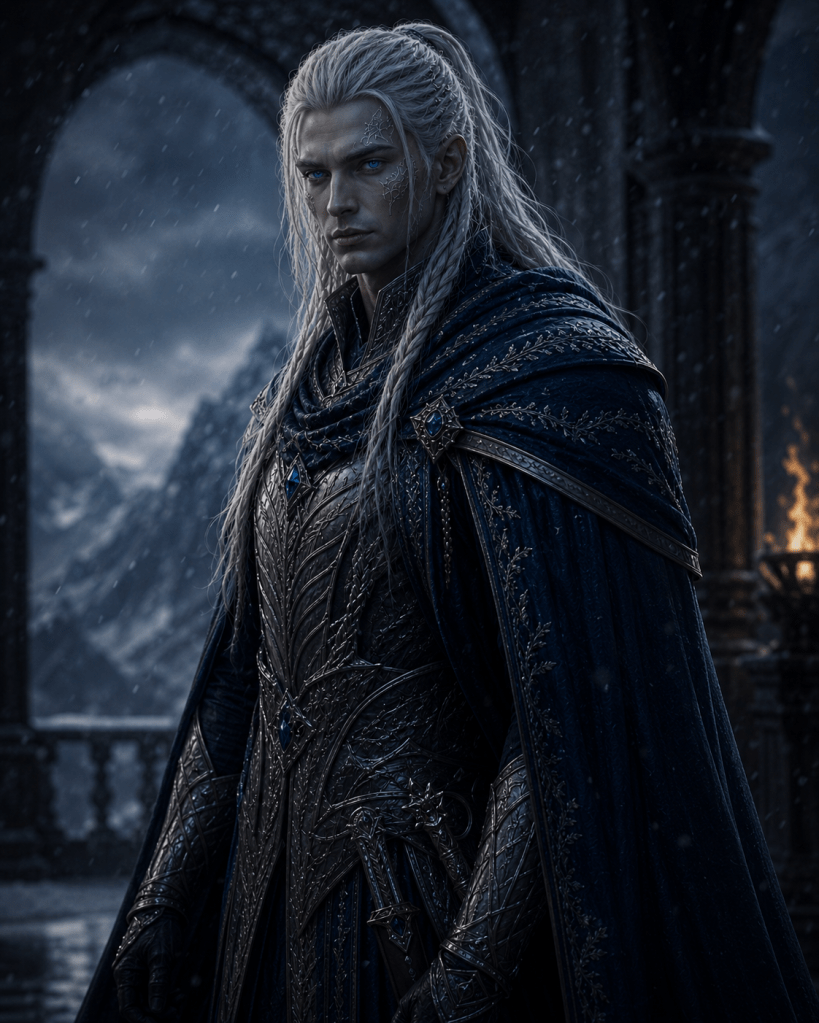
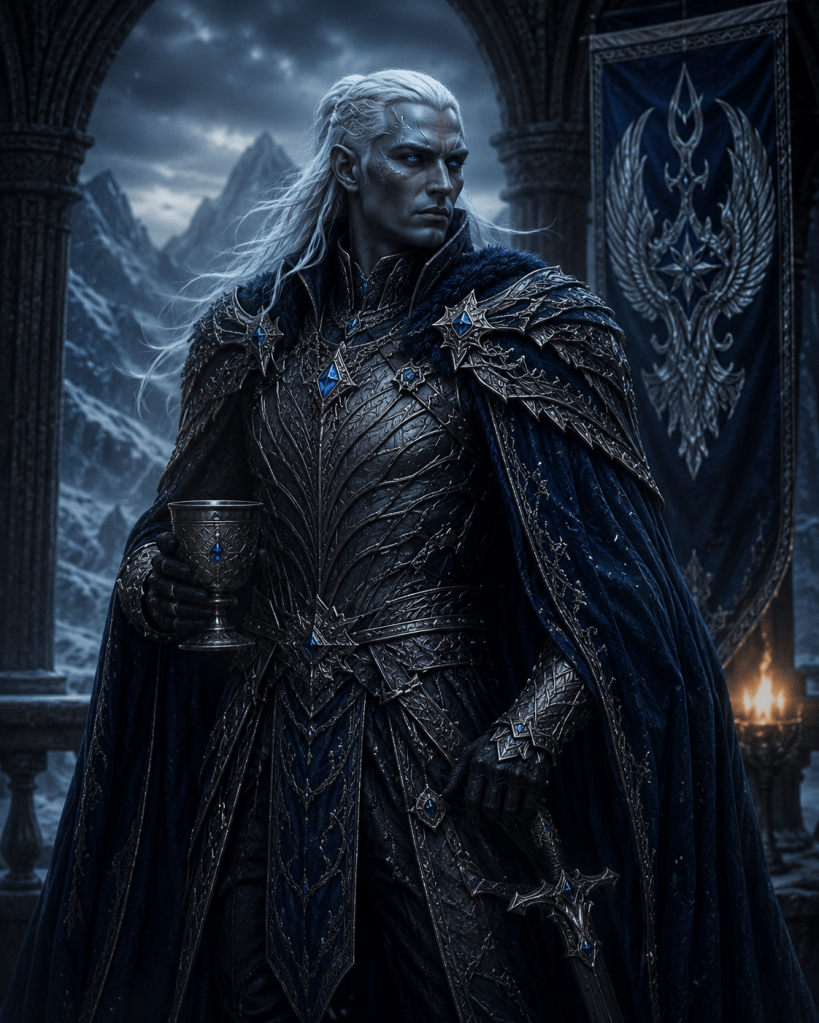
Нинішній глава роду Імеа: Ейрн Лірхельм Оллавур Імеа, Вищий Алар і Владика над дванадцятьма Алами. Понад усе він прагне повернути Едасу колишню славу й довести, що саме вони є наймогутнішою з гілок дітей Еви.
Своїх дітей Лірхельм виховував не лише як спадкоємців. Кожен із них мав стати частиною його великого задуму. Одні охороняли кордони, інші керували віддаленими землями, навчалися у давніх чарівників або жили серед інших народів. Лірхельм розставив синів і дочок по всьому континенту так, щоб скрізь мати власні очі, вуха й руки.
Не дивно, що близькість у цій великій родині часто поступалася місцем обов’язку. Діти Лірхельма знали, ким повинні стати для роду, значно раніше, ніж устигали зрозуміти, ким хочуть бути самі.
Воїни-ворони
Особливе місце серед слуг Вищого Алара посідали альви – воїни-перевертні Едасу.
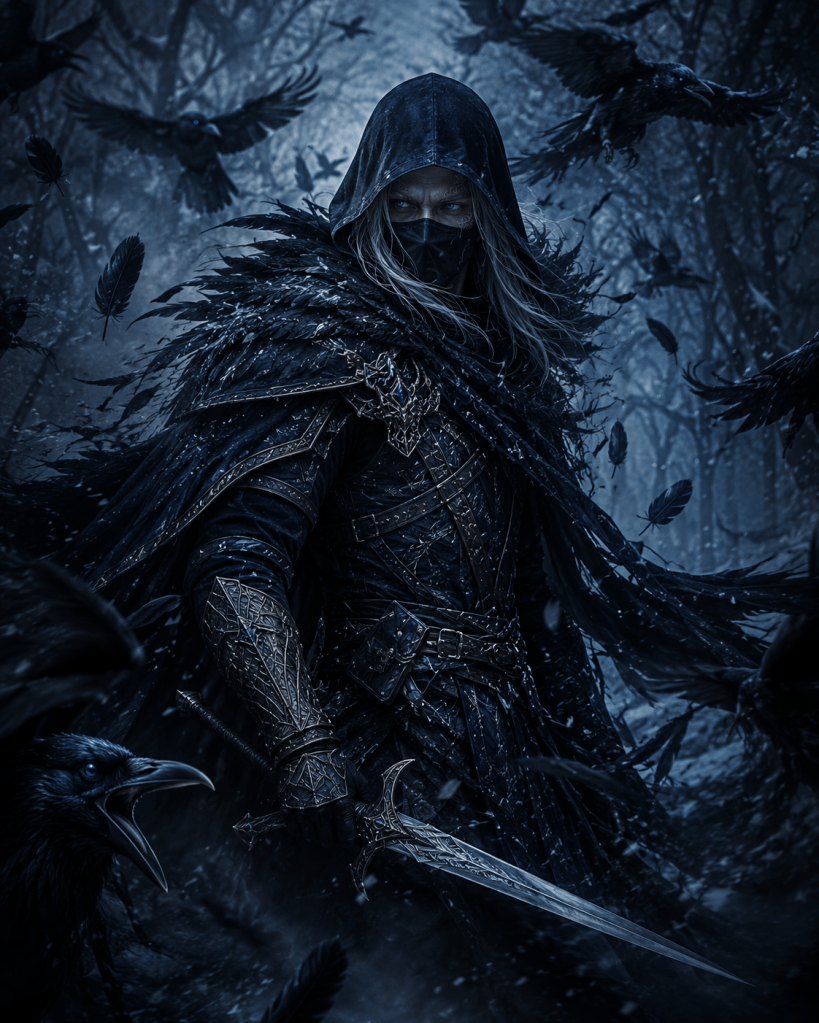
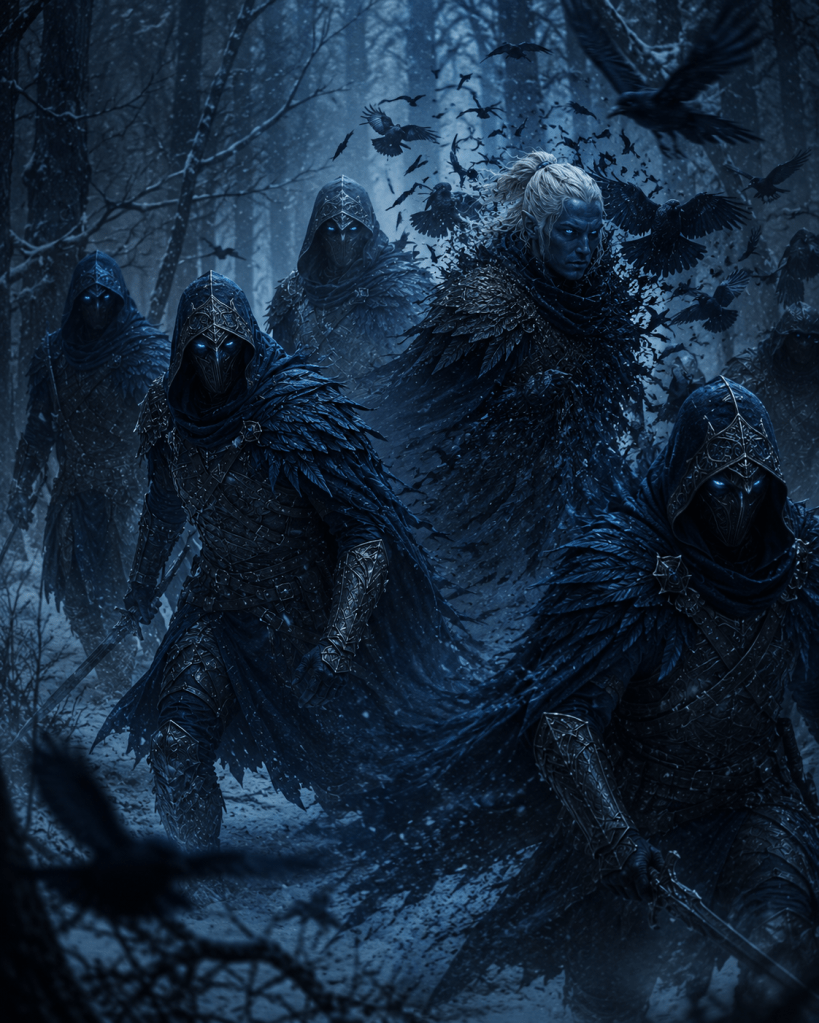
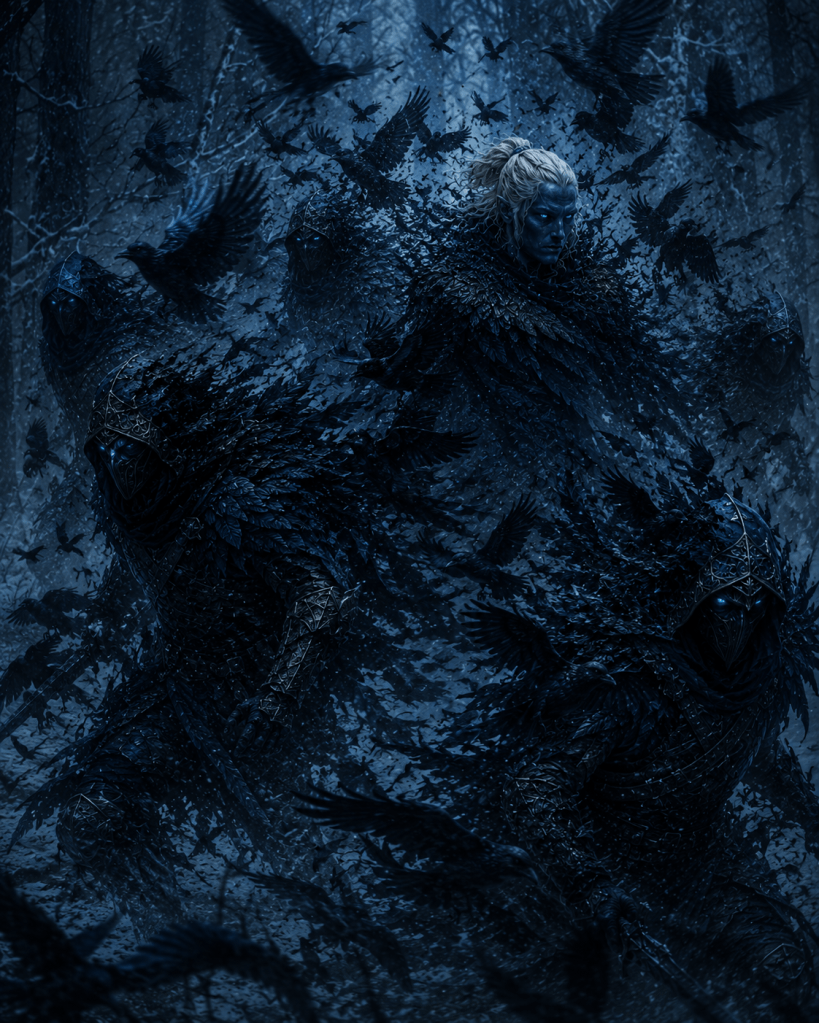
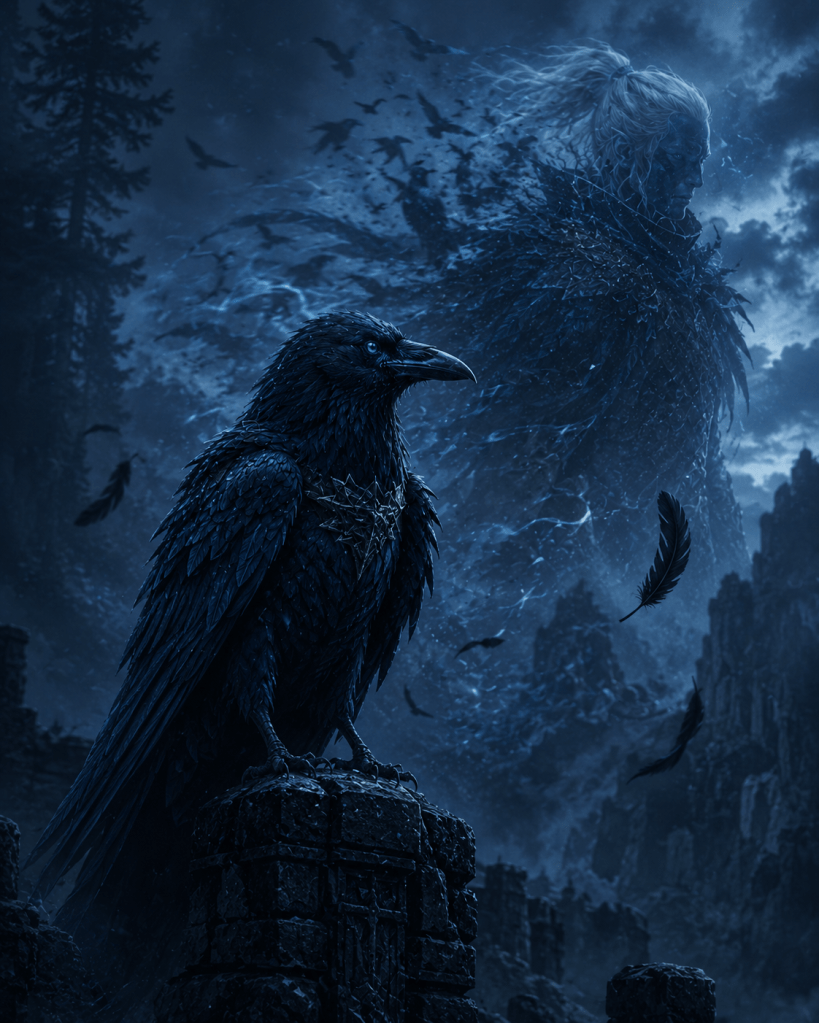
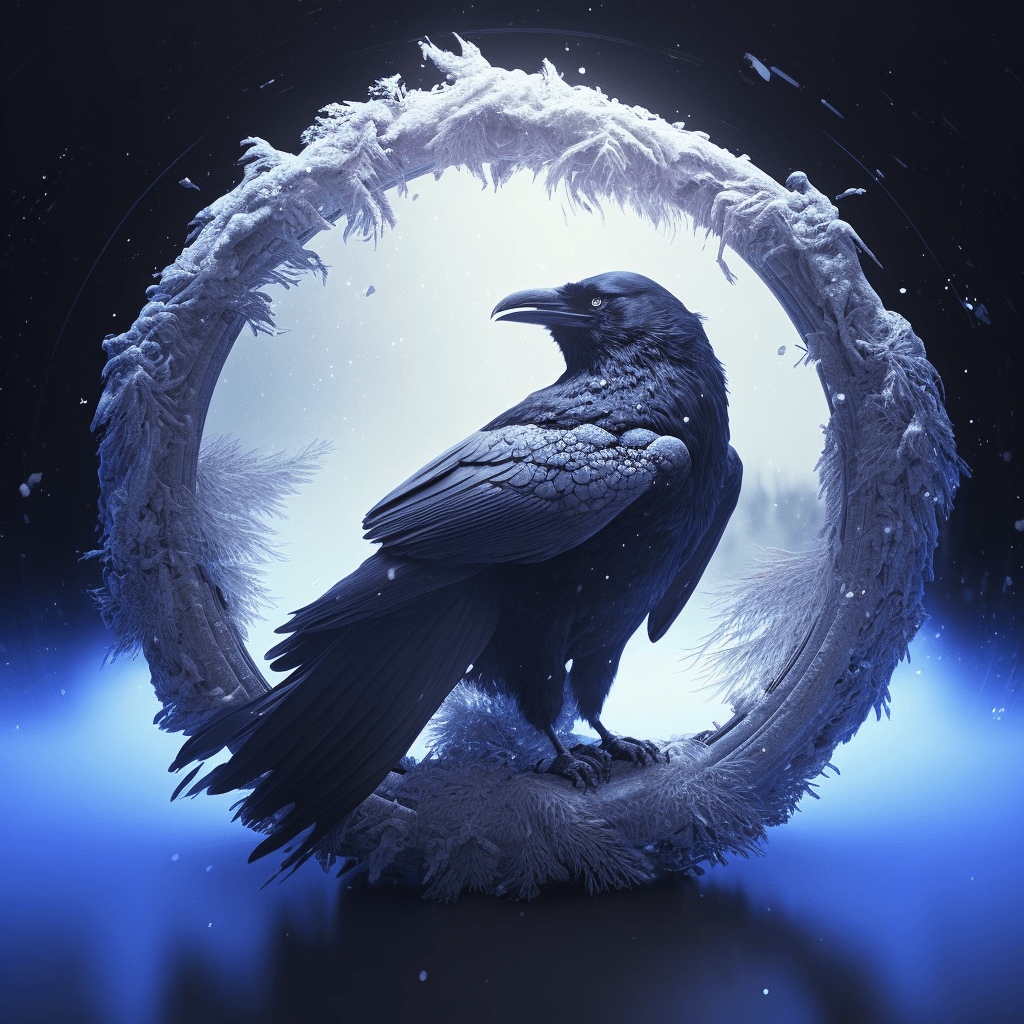
Вони могли перекидатися на воронів, долати величезні відстані зграєю, непомітно стежити за супротивниками й з’являтися там, де на них найменше чекали. Закуті в темне залізо, в однакових масках і панцирах, альви виконували накази Лірхельма, проводили розвідку та оберігали інтереси Едасу за межами їхніх земель.
Саме до них належав Гем.
До нього шпигуном Алара був його молодший брат Ейм. Після загибелі Ейма це місце і посів Е’тіль.
І тут, мені здається, особливо добре видно ставлення Лірхельма до власних дітей: смерть одного сина не зупинила його задумів. Звільнене місце просто мав зайняти інший. Добре, що синів в нього вистачає…
Для роду це було продовженням служби. Для Е’тіля – втратою брата і новим обов’язком, від якого він не міг відмовитися.
Увага: далі будуть спойлери до “Сказанки про Крижаного Звіра”.
На початку своєї історії Гем багато в чому поділяє переконання батька. Він вірить у велич Едасу, у право сильнішого керувати слабшими й у те, що деякі народи нібито самою долею призначені коритися.
Але ще навіть не називаючи Волошиних своїми друзями, Гем рятує їх, допомагає вибратися з Другецю, знаходить загублену зброю і ділиться власною кров’ю з Родосвітом, аби той вижив. Він продовжує стежити за братами й виконує накази батька, але водночас раз у раз порушує їх заради тих, кого мав лише використати.
Його вражають стосунки Бестужа й Родосвіта. Вони сваряться, сердяться, завдають одне одному болю, але в найважчі миті знову обирають одне одного. Родосвіт захищає молодшого брата не тому, що так наказує володар або вимагає рід. І Бестуж іде за ним не лише через страх чи залежність. Ні, спочатку вони саме так і роблять) Але життя їх мирить одне з одним. І в решті решт, їх пов’язує те, чого Гем майже не знав у власній численній родині: братня відданість, яка не потребує користі.
Я гадаю, щось подібне колись пов’язувало його з Еймом, наймолодшим із братів Імеа. Гем згадує, що в дитинстві радів уже самому факту, що після нього народився ще хтось і він не залишився наймолодшим. Після загибелі Ейма зник останній, поруч із ким Е’тіль міг почуватися не шпигуном, альвом або сином Вищого Алара, а просто братом.
Саме тому його дитяче прізвисько набуває зовсім іншого значення.
– Мене звати Е’тіль. Е’тіль, не Гем. Я тоді назвався вам прізвиськом, яким мене кликали в дитинстві, – глухо відповідав він й я закляк.
Гемом його називали в ті часи, коли його ще неможливо було втримати вдома: він постійно тікав, мандрував і прагнув побачити світ за межами батькових володінь. Згодом це ім’я повернулося до нього разом із воїнами-воронами, і невипадково саме ним він назвався Волошиним.
Та справжній вибір Гем робить пізніше. Коли Бестуж опиняється у в’язниці лорда Лірхельма, Гем уже не намагається переконати того в правоті Едасу. Він сам стає бранцем власного батька. А коли з’являється можливість утекти, Гем повертається по Родосвіта, виносить його з казні й допомагає братам залишити Ашпіль.
Навіть тоді, коли місто вже поглинає море, він не кидає пораненого Родосвіта. А зустрівшись із Ніамом, виходить уперед і захищає собою Бестужа.
Гем уперше відкрито заперечує усьому, чого його навчав батько. Він відмовляється визнавати вигадане право Едасу на владу над Континентом і називає прагнення до завоювання тим, чим воно насправді стало: чужою брехнею, що живила гордість Лірхельма.
У “Сказанці” він майже не отримав часу пожити відповідно до власного вибору. Але встиг довести його вчинками.
Е’тіль Імеа загинув як син одного з наймогутніших родів Едасу.
А Гем – як той, ким вирішив стати сам.
Мабуть, саме тому мені й досі трохи прикро з ним розставатися.
Але історія Едасу на цьому не завершується. Далі ми ще поговоримо про Ораолів і Саїнна, а вже 1 серпня повернемося до останнього дня однієї з трьох гілок дітей Еви, – в оповіданні “Солов’ї Лавелену”.
~~~
Eidasu
Ahead of the release of “The Nightingales of Lavelen,” which, by the way, is scheduled for August 1, I would like to tell you a little more about the Children of Ewa. First of all, about the Eidasu—and to revisit someone we have already met in “The Tale of the Ice Beast.”
E’til Imea. Or simply Gem, as E’til himself asked to be called.
In The Tale, we see only a small part of his life. Yet behind Gem stands an ancient and powerful house, numerous brothers and sisters, distant lands, family duties, and a history that stretches far beyond the boundaries of a single story.
House Imea, like every other house belonging to the Edasu branch, traces its ancestry back to Aron, the second son of Eva and Irn and the guardian of the Eastern Mountains. According to legend, he took as his wife Nairi, a dark-skinned, black-eyed huntress from one of the mountain tribes. From their union came the people known as the Eidasu.
The Eidasu are said to have inherited their ancestors’ endurance, keen eyesight, ability to survive among cliffs and dark forests, and the gift of transforming into animals. Perhaps that is why there has always been something of the wild in them: something free, dangerous, and slightly removed from the rest of the world.
Head of House Imea
The current head of House Imea is Eirn Lirhelm Ollavur Imea, High Alar and Lord of the Twelve Als. More than anything, he wishes to restore the former glory of the Edasu and prove that they are the mightiest of all the branches descended from the Children of Ewa.
Lirhelm did not raise his children merely as heirs. Each of them was meant to become part of his greater design.
Some guarded the borders. Others governed distant lands, studied under ancient mages, or lived among other peoples. Lirkhelm scattered his sons and daughters across the continent so that he would always have his own eyes, ears, and hands wherever he needed them.
It is hardly surprising that, within such a large family, affection often gave way to duty. Lirhelm’s children learned what they were expected to become for the sake of their house long before they had the chance to understand who they wished to become for themselves.
The Crow Warriors
The Alvi—Eidasu warrior-shapeshifters—held a special place among the servants of the High Alar.
They could transform into crows, cross enormous distances as a flock, observe their enemies without being noticed, and appear where they were least expected. Clad in dark iron, wearing identical masks and armour, the Alvi carried out Lirhelm’s orders, gathered intelligence, and protected Eidasu interests far beyond their own lands.
Gem was one of them.
Before him, the Alar’s spy had been his younger brother, Eim. After Eim’s death, E’til took his place.
And this, I think, reveals Lirhelm’s attitude toward his own children particularly well: the death of one son did not halt his plans. The newly vacant position simply had to be filled by another.
Good thing he had sons to spare…
For the house, it was merely a continuation of service. For E’til, it was the loss of a brother—and a new duty he had no power to refuse.
Spoiler warning: the following contains spoilers for “The Tale of the Ice Beast”
At the beginning of his story, Gem shares many of his father’s beliefs. He believes in the greatness of the Eidasu, in the right of the strong to rule the weak, and in the idea that some peoples are supposedly destined by fate itself to submit.
Yet even before he is ready to call the Voloshyn brothers his friends, Hem saves them. He helps them escape from Drugets, recovers their lost weapons, and shares his own blood with Rodosvit so that he might survive.
He continues to watch the brothers and carry out his father’s orders, but at the same time, he repeatedly breaks those orders for the sake of the very people he was only meant to use.
The relationship between Bestuzh and Rodosvit fascinates him. They quarrel, grow angry, hurt one another, yet in the moments that matter most, they continue to choose each other.
Rodosvit protects his younger brother not because a ruler commands it or because their family demands it. And Bestuzh does not follow him merely out of fear or dependence.
Well, at first, that is exactly what they do.
But life gradually reconciles them. In the end, they are bound by something Hem has barely known within his own vast family: brotherly devotion that asks for nothing in return.
I imagine that something similar once existed between him and Eim, the youngest of the Imea brothers. Hem remembers that, as a child, he was happy simply because someone had been born after him and he was no longer the youngest.
After Eim’s death, E’til lost the last person beside whom he might have felt not like a spy, an Alvi, or the son of the High Alar—but simply like a brother.
That is why his childhood nickname takes on an entirely different meaning.
“My name is E’til. E’til, not Gem. Back then, I gave you the nickname they used to call me when I was a child,” he replied dully, and I froze.
“And what does that nickname mean?”
“To put it mildly—a homeless one. A wanderer. A vagabond.”
He had been called Gem in the days when no one could keep him at home: he was always running away, wandering, and longing to see the world beyond his father’s lands.
Later, that name returned to him alongside the Raven Warriors—and it was no coincidence that this was the name he gave the Voloshyn brothers.
But Gem makes his true choice much later.
When Bestuzh is imprisoned by Lord Lirhelm, Gem no longer tries to persuade him that the Edasu are right. He becomes a prisoner of his own father. And when an opportunity to escape finally appears, Hem goes back for Rodosvit, carries him out of the dungeon, and helps the brothers flee Ashpil.
Even as the sea begins to swallow the city, he refuses to abandon the wounded Rodosvit. And when they face Niam, Hem steps forward and shields Bestuzh with his own body.
For the first time, Gem openly rejects everything his father taught him. He refuses to recognise the Eidasu’s supposed right to rule the Continent and calls their desire for conquest what it has truly become: another lie feeding Lirhelm’s pride.
In “The Tale of the Ice Beast,” Gem is given almost no time to live according to his own choices.
But he has enough time to prove them through his actions.
E’til Imea died as the son of one of the most powerful houses of the Edasu.
Hem died as the person he had chosen to become.
Perhaps that is why I am still a little sad that I had to say goodbye to him.
But the story of the Edasu does not end here. Next, we will speak about the Oraolё and the Sainna—and on August 1, we will return to the final day of one of the three branches of Ewa’s children in “The Nightingales of Lavelen.”
August and September were tough on me and my family.
But giving up was never an option.
I’m glad I finally published Ice Beast Tale on booknet and wattapad. Be my guests and feel free to read and leave some comments for me.
Let’s hope the end of this year will be more peaceful for us.
P.S. Once I promised to Mr. Tolkien (in my thoughts of course) that I will never stop writing. It was nasty autumn afternoon and I felt pretty sad. But I remember that thought every day since and it gives me inner powers to keep going. I won’t let you down.
~~~
Серпень та вересень стали тяжким випробуванням для мене та моєї родини.
Але здаватися ніколи не було варіантом.
Я рада, що я нарешті опублікувала Сказанку про Крижаного Звіра на booknet та wattapad. Тепер її можна прочести там і залишити коментарі для мене.
Сподіватимемося, кінець року буде мирним для всіх нас.
П.С. Одного дощового осінного дня я пообіцяла містеру Толкієну (подумки, звичайно), що ніколи не припиню писати. І ця думка допомогає мені кожен день, дає внутрішню силу стримати обіцянку. Не хвилюйтеся, я вас не підведу.
It still needs tons for editing and, first of all, my inner powers to perform that editing. But that will be tomorrow. Today I am celebrating. As The Ice Beast Tale is a story I’ve been trying to embody since I was eleven years old, I guess. And my dream has finally come true!
I almost remember the day when it all started with a word Oraolё that came up to my mind. And here we are, decades later. Extraordinary feeling.
It is not the end of a story though, but a beginning. Which joys me most of all. As I am stuck with the characters I’ve been loving for years.
And as a New Year bonus to myself, I decided to duplicate my blog notes in Ukrainian. I never felt more connected to my people story than I am now. So let it be.
As per will and destiny
~~~~~~~~
Другу чернетку…нарешті завершено! Та-да-да-да!
Вона ще потребує тонни редагування та, насамперед, моїх внутрішніх сил, щоб виконати це редагування. Але це буде завтра. Сьогодні я святкую. Оскільки «Сказанка про Крижаного Звіра» — це історія, яку я, мабуть, намагалася втілити в життя десь з одинадцяти років. І ця мрія нарешіті здійснилася!
Майже пам’ятаю той день, коли все почалося зі слова Ораолё, що застрягло в моїй голові. І ось ми тут, десятиліття потому. Надзвичайне відчуття.
Але це аж ніяк не кінець історії, а лише її початок. І це мене тішить найбільше. Бо ж це значить, що я застряла з персонажами, яких люблю, ще на деякий час.
І, як новорічний бонус, я вирішила писати обидвома мовами у цьому блозі: додала Української. Ніколи не почувала себе такою спорідненою з історією мого народу як зараз. Тож нехай так і буде.