


Едасу
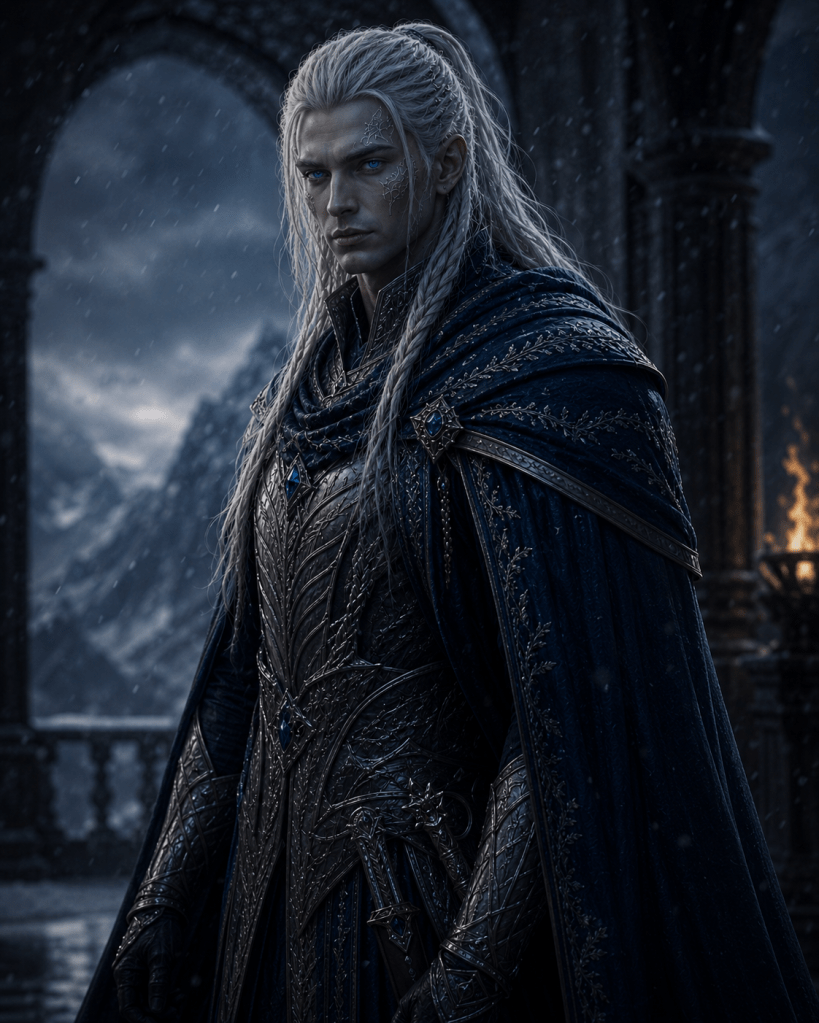
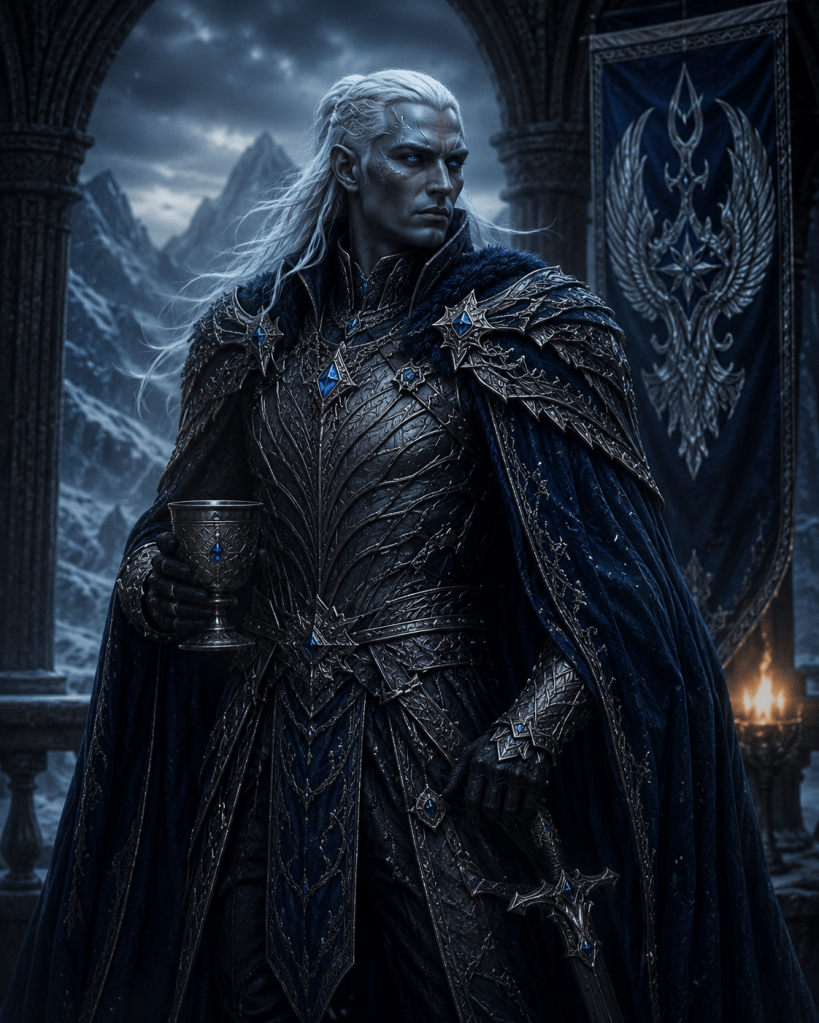
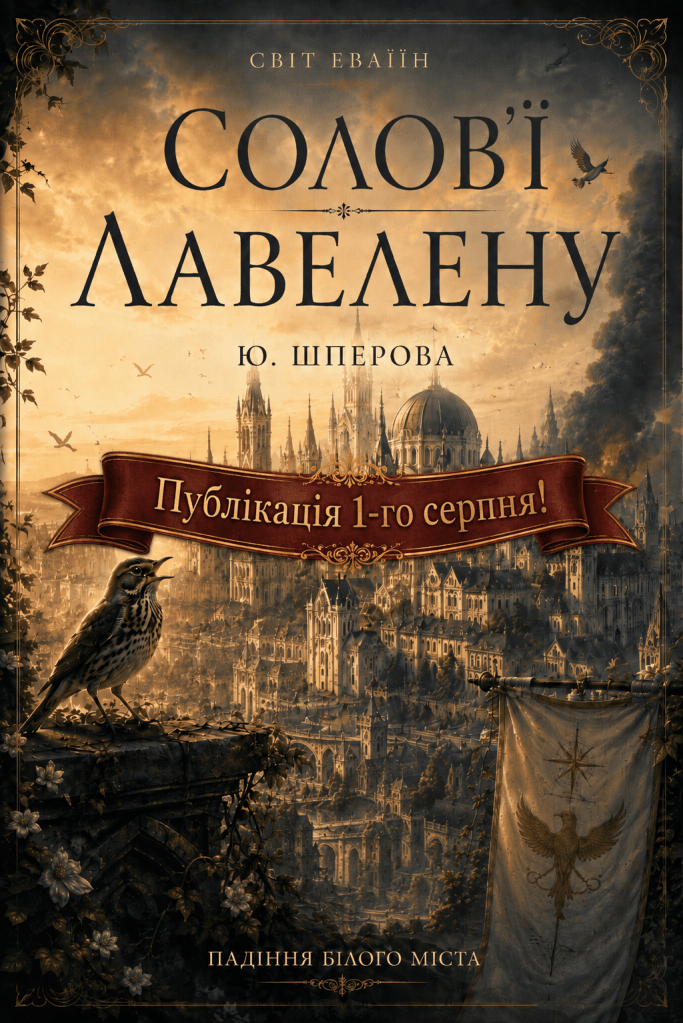
Напередодні виходу оповідання “Солов’ї Лавелену”, який, до речі, заплановано на 1 серпня, пропоную трохи більше дізнатися про дітей Еви. І насамперед, про Едасу, і пригадати одного з тих, із ким ми вже зустрічалися у “Сказанці про Крижаного Звіра”.
Е’тіля Імеа.
Або просто Гема, як Е’тіль сам просив себе називати.
У самій “Сказанці” ми бачимо лише невелику частину його життя. Проте за Гемом стоїть давній і могутній рід, численні брати й сестри, віддалені землі, родові обов’язки та історія, що простягається далеко за межі однієї розповіді.
Рід Імеа, як і всі інші роди гілки Едасу, веде своє походження від Арона – другого сина Еви й Ірна, хранителя Східних Гір. За переказами, саме він взяв собі за дружину темношкіру чорнооку мисливицю з гірських племен Найрі. Від цього союзу й пішов народ Eidasu.
Кажуть, Едасу успадкували від своїх пращурів витривалість, гострий зір, уміння жити серед скель і темних лісів, а ще, здатність перекидатися на тварин. Можливо, саме тому в них завжди було щось від дикої природи: щось вільне, небезпечне й трохи відсторонене від решти світу.
Голова роду Імеа
Нинішній глава роду Імеа: Ейрн Лірхельм Оллавур Імеа, Вищий Алар і Владика над дванадцятьма Алами. Понад усе він прагне повернути Едасу колишню славу й довести, що саме вони є наймогутнішою з гілок дітей Еви.
Своїх дітей Лірхельм виховував не лише як спадкоємців. Кожен із них мав стати частиною його великого задуму. Одні охороняли кордони, інші керували віддаленими землями, навчалися у давніх чарівників або жили серед інших народів. Лірхельм розставив синів і дочок по всьому континенту так, щоб скрізь мати власні очі, вуха й руки.
Не дивно, що близькість у цій великій родині часто поступалася місцем обов’язку. Діти Лірхельма знали, ким повинні стати для роду, значно раніше, ніж устигали зрозуміти, ким хочуть бути самі.
Воїни-ворони
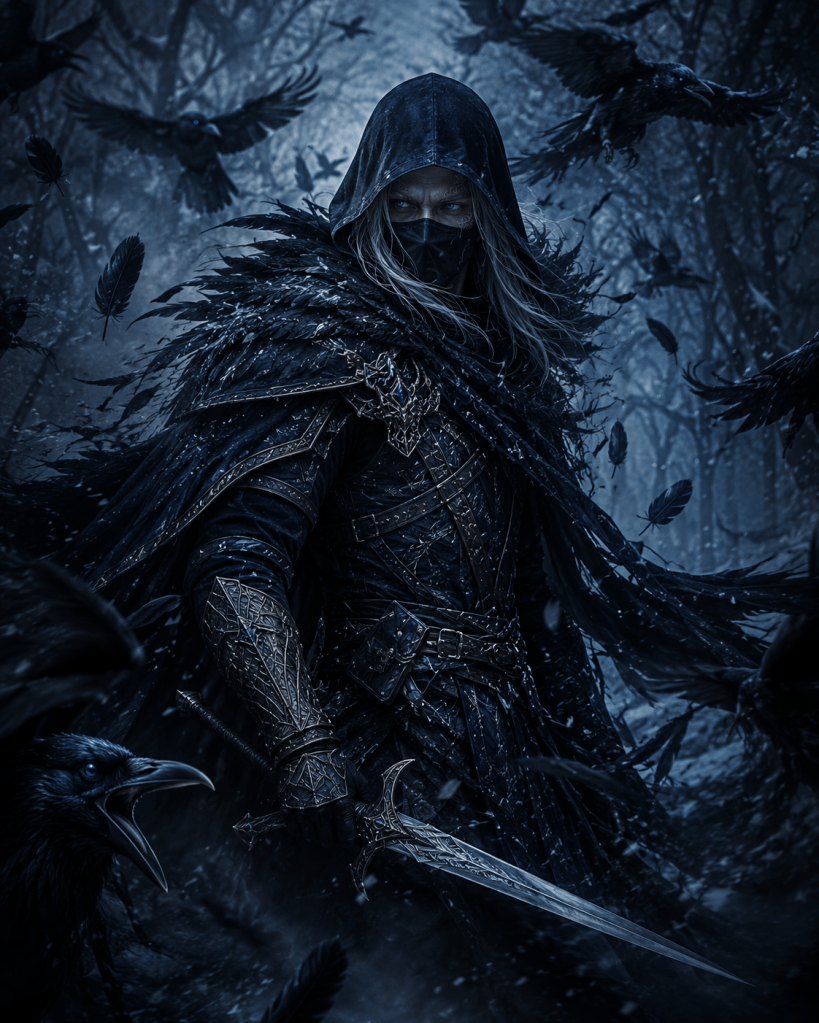
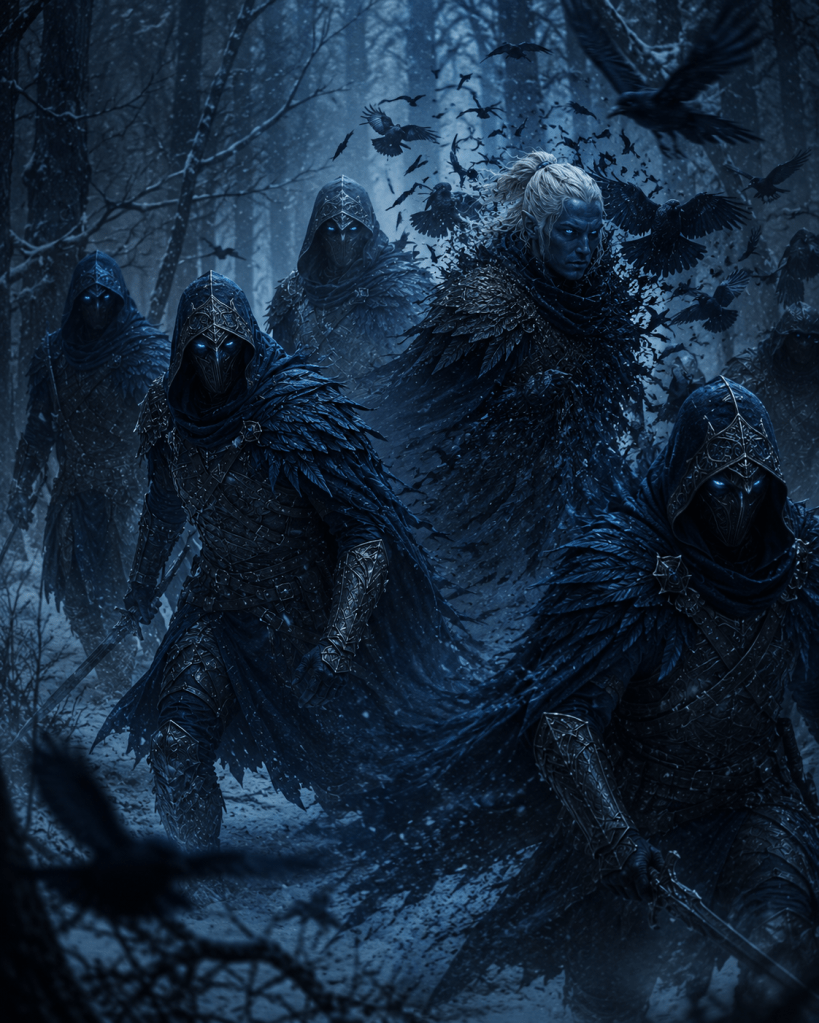
Особливе місце серед слуг Вищого Алара посідали альви – воїни-перевертні Едасу.
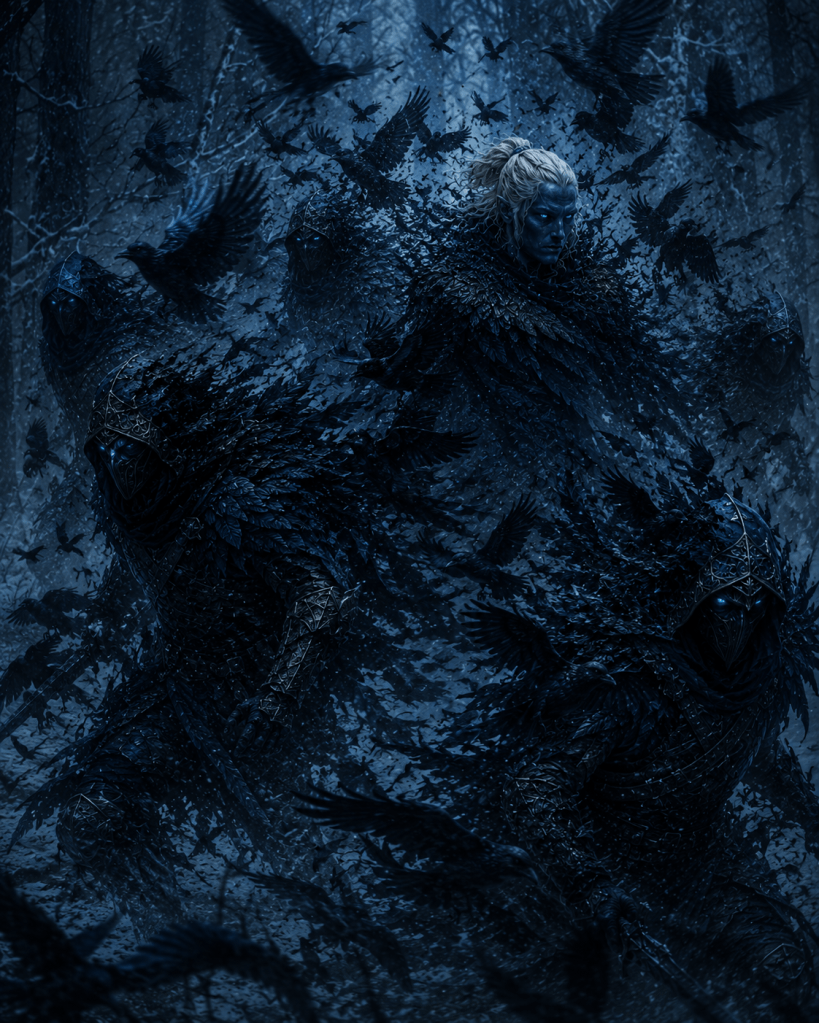
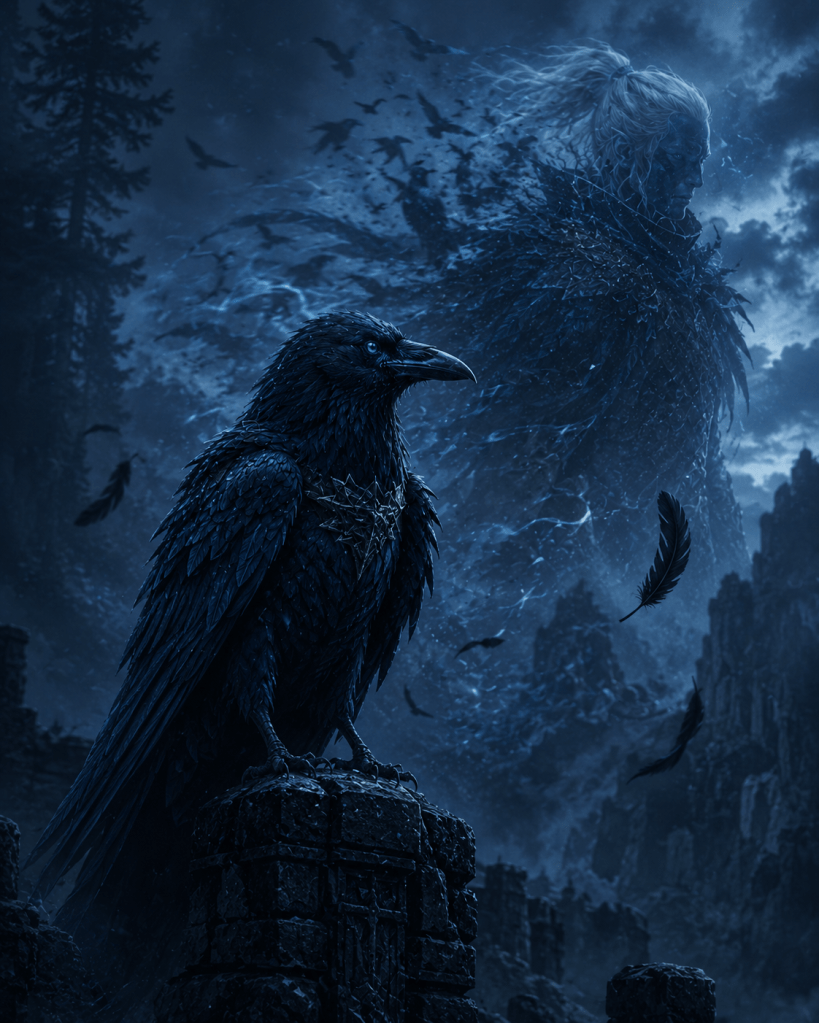
Вони могли перекидатися на воронів, долати величезні відстані зграєю, непомітно стежити за супротивниками й з’являтися там, де на них найменше чекали. Закуті в темне залізо, в однакових масках і панцирах, альви виконували накази Лірхельма, проводили розвідку та оберігали інтереси Едасу за межами їхніх земель.
Саме до них належав Гем.
До нього шпигуном Алара був його молодший брат Ейм. Після загибелі Ейма це місце і посів Е’тіль.
І тут, мені здається, особливо добре видно ставлення Лірхельма до власних дітей: смерть одного сина не зупинила його задумів. Звільнене місце просто мав зайняти інший. Добре, що синів в нього вистачає…
Для роду це було продовженням служби. Для Е’тіля – втратою брата і новим обов’язком, від якого він не міг відмовитися.
Увага: далі будуть спойлери до “Сказанки про Крижаного Звіра”.
На початку своєї історії Гем багато в чому поділяє переконання батька. Він вірить у велич Едасу, у право сильнішого керувати слабшими й у те, що деякі народи нібито самою долею призначені коритися.
Але ще навіть не називаючи Волошиних своїми друзями, Гем рятує їх, допомагає вибратися з Другецю, знаходить загублену зброю і ділиться власною кров’ю з Родосвітом, аби той вижив. Він продовжує стежити за братами й виконує накази батька, але водночас раз у раз порушує їх заради тих, кого мав лише використати.
Його вражають стосунки Бестужа й Родосвіта. Вони сваряться, сердяться, завдають одне одному болю, але в найважчі миті знову обирають одне одного. Родосвіт захищає молодшого брата не тому, що так наказує володар або вимагає рід. І Бестуж іде за ним не лише через страх чи залежність. Ні, спочатку вони саме так і роблять) Але життя їх мирить одне з одним. І в решті решт, їх пов’язує те, чого Гем майже не знав у власній численній родині: братня відданість, яка не потребує користі.
Я гадаю, щось подібне колись пов’язувало його з Еймом, наймолодшим із братів Імеа. Гем згадує, що в дитинстві радів уже самому факту, що після нього народився ще хтось і він не залишився наймолодшим. Після загибелі Ейма зник останній, поруч із ким Е’тіль міг почуватися не шпигуном, альвом або сином Вищого Алара, а просто братом.
Саме тому його дитяче прізвисько набуває зовсім іншого значення.
– Мене звати Е’тіль. Е’тіль, не Гем. Я тоді назвався вам прізвиськом, яким мене кликали в дитинстві, – глухо відповідав він й я закляк.
– І що ж значить то твоє прізвисько?
– М’яко кажучи, безпритульник. Бродяжка. Волоцюга.
Гемом його називали в ті часи, коли його ще неможливо було втримати вдома: він постійно тікав, мандрував і прагнув побачити світ за межами батькових володінь. Згодом це ім’я повернулося до нього разом із воїнами-воронами, і невипадково саме ним він назвався Волошиним.
Та справжній вибір Гем робить пізніше. Коли Бестуж опиняється у в’язниці лорда Лірхельма, Гем уже не намагається переконати того в правоті Едасу. Він сам стає бранцем власного батька. А коли з’являється можливість утекти, Гем повертається по Родосвіта, виносить його з казні й допомагає братам залишити Ашпіль.
Навіть тоді, коли місто вже поглинає море, він не кидає пораненого Родосвіта. А зустрівшись із Ніамом, виходить уперед і захищає собою Бестужа.
Гем уперше відкрито заперечує усьому, чого його навчав батько. Він відмовляється визнавати вигадане право Едасу на владу над Континентом і називає прагнення до завоювання тим, чим воно насправді стало: чужою брехнею, що живила гордість Лірхельма.
У “Сказанці” він майже не отримав часу пожити відповідно до власного вибору. Але встиг довести його вчинками.
Е’тіль Імеа загинув як син одного з наймогутніших родів Едасу.
А Гем – як той, ким вирішив стати сам.
Мабуть, саме тому мені й досі трохи прикро з ним розставатися.
Але історія Едасу на цьому не завершується. Далі ми ще поговоримо про Ораолів і Саїнна, а вже 1 серпня повернемося до останнього дня однієї з трьох гілок дітей Еви, – в оповіданні “Солов’ї Лавелену”.
~~~
Eidasu
Ahead of the release of “The Nightingales of Lavelen,” which, by the way, is scheduled for August 1, I would like to tell you a little more about the Children of Ewa. First of all, about the Eidasu—and to revisit someone we have already met in “The Tale of the Ice Beast.”
E’til Imea.
Or simply Gem, as E’til himself asked to be called.
In The Tale, we see only a small part of his life. Yet behind Gem stands an ancient and powerful house, numerous brothers and sisters, distant lands, family duties, and a history that stretches far beyond the boundaries of a single story.
House Imea, like every other house belonging to the Edasu branch, traces its ancestry back to Aron, the second son of Eva and Irn and the guardian of the Eastern Mountains. According to legend, he took as his wife Nairi, a dark-skinned, black-eyed huntress from one of the mountain tribes. From their union came the people known as the Eidasu.
The Eidasu are said to have inherited their ancestors’ endurance, keen eyesight, ability to survive among cliffs and dark forests, and the gift of transforming into animals. Perhaps that is why there has always been something of the wild in them: something free, dangerous, and slightly removed from the rest of the world.
Head of House Imea
The current head of House Imea is Eirn Lirhelm Ollavur Imea, High Alar and Lord of the Twelve Als. More than anything, he wishes to restore the former glory of the Edasu and prove that they are the mightiest of all the branches descended from the Children of Ewa.
Lirhelm did not raise his children merely as heirs. Each of them was meant to become part of his greater design.
Some guarded the borders. Others governed distant lands, studied under ancient mages, or lived among other peoples. Lirkhelm scattered his sons and daughters across the continent so that he would always have his own eyes, ears, and hands wherever he needed them.
It is hardly surprising that, within such a large family, affection often gave way to duty. Lirhelm’s children learned what they were expected to become for the sake of their house long before they had the chance to understand who they wished to become for themselves.
The Crow Warriors
The Alvi—Eidasu warrior-shapeshifters—held a special place among the servants of the High Alar.
They could transform into crows, cross enormous distances as a flock, observe their enemies without being noticed, and appear where they were least expected. Clad in dark iron, wearing identical masks and armour, the Alvi carried out Lirhelm’s orders, gathered intelligence, and protected Eidasu interests far beyond their own lands.
Gem was one of them.
Before him, the Alar’s spy had been his younger brother, Eim. After Eim’s death, E’til took his place.
And this, I think, reveals Lirhelm’s attitude toward his own children particularly well: the death of one son did not halt his plans. The newly vacant position simply had to be filled by another.
Good thing he had sons to spare…
For the house, it was merely a continuation of service. For E’til, it was the loss of a brother—and a new duty he had no power to refuse.
Spoiler warning: the following contains spoilers for “The Tale of the Ice Beast”
At the beginning of his story, Gem shares many of his father’s beliefs. He believes in the greatness of the Eidasu, in the right of the strong to rule the weak, and in the idea that some peoples are supposedly destined by fate itself to submit.
Yet even before he is ready to call the Voloshyn brothers his friends, Hem saves them. He helps them escape from Drugets, recovers their lost weapons, and shares his own blood with Rodosvit so that he might survive.
He continues to watch the brothers and carry out his father’s orders, but at the same time, he repeatedly breaks those orders for the sake of the very people he was only meant to use.
The relationship between Bestuzh and Rodosvit fascinates him. They quarrel, grow angry, hurt one another, yet in the moments that matter most, they continue to choose each other.
Rodosvit protects his younger brother not because a ruler commands it or because their family demands it. And Bestuzh does not follow him merely out of fear or dependence.
Well, at first, that is exactly what they do.
But life gradually reconciles them. In the end, they are bound by something Hem has barely known within his own vast family: brotherly devotion that asks for nothing in return.
I imagine that something similar once existed between him and Eim, the youngest of the Imea brothers. Hem remembers that, as a child, he was happy simply because someone had been born after him and he was no longer the youngest.
After Eim’s death, E’til lost the last person beside whom he might have felt not like a spy, an Alvi, or the son of the High Alar—but simply like a brother.
That is why his childhood nickname takes on an entirely different meaning.
“My name is E’til. E’til, not Gem. Back then, I gave you the nickname they used to call me when I was a child,” he replied dully, and I froze.
“And what does that nickname mean?”
“To put it mildly—a homeless one. A wanderer. A vagabond.”
He had been called Gem in the days when no one could keep him at home: he was always running away, wandering, and longing to see the world beyond his father’s lands.
Later, that name returned to him alongside the Raven Warriors—and it was no coincidence that this was the name he gave the Voloshyn brothers.
But Gem makes his true choice much later.
When Bestuzh is imprisoned by Lord Lirhelm, Gem no longer tries to persuade him that the Edasu are right. He becomes a prisoner of his own father. And when an opportunity to escape finally appears, Hem goes back for Rodosvit, carries him out of the dungeon, and helps the brothers flee Ashpil.
Even as the sea begins to swallow the city, he refuses to abandon the wounded Rodosvit. And when they face Niam, Hem steps forward and shields Bestuzh with his own body.
For the first time, Gem openly rejects everything his father taught him. He refuses to recognise the Eidasu’s supposed right to rule the Continent and calls their desire for conquest what it has truly become: another lie feeding Lirhelm’s pride.
In “The Tale of the Ice Beast,” Gem is given almost no time to live according to his own choices.
But he has enough time to prove them through his actions.
E’til Imea died as the son of one of the most powerful houses of the Edasu.
Hem died as the person he had chosen to become.
Perhaps that is why I am still a little sad that I had to say goodbye to him.
But the story of the Edasu does not end here. Next, we will speak about the Oraolё and the Sainna—and on August 1, we will return to the final day of one of the three branches of Ewa’s children in “The Nightingales of Lavelen.”

